News

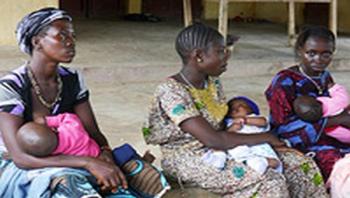
Angola's Singing AIDS Nurses

Nurse-trainer Helena Cumbelembe Inacio was struggling to teach nurses at the health center here the correct combination of medicines to prevent pregnant women with HIV from passing the infection to their children. The nurses couldn’t quite master the medication protocol. “The learning is slow, and they could not pronounce well the names of the antiretroviral drugs, let alone to remember the combination of the drugs,” Cumbelembe Inacio recalled.

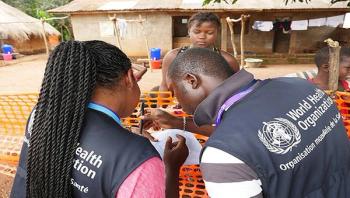
In late August 2015, as Sierra Leone anxiously counted each day that passed with no new confirmed Ebola cases, a woman fell ill with fever, then diarrhea and vomiting in Sella Kafta village, Tonko Limba chiefdom, Kambia. Her family cared for her at home and, though her symptoms got worse, no one called the Ebola hotline. She was not tested for Ebola virus until after she died, when the Safe and Dignified Burial team were called to bury her and, following surveillance protocols, took a swab. That swab tested positive for Ebola virus disease, bitterly disappointing a country hoping to see an end of Ebola transmission and triggering a rapid response by the World Health Organization (WHO) and partners.

Between Sept. 1 and Sept. 5, 2015, the National IHR Focal Point for the Kingdom of Saudi Arabia notified the World Health Organization (WHO) of 25 additional cases of Middle East respiratory syndrome coronavirus (MERS-CoV) infection. Ten of these reported cases are associated with a MERS-CoV outbreak currently occurring in a hospital in Riyadh City.

Clorox Healthcare and the Alliance for the Prudent Use of Antibiotics (APUA) announce a new partnership to educate the healthcare community on comprehensive infection control practices to help reduce the spread of infection in healthcare facilities. The Centers for Disease Control and Prevention (CDC) estimates that drug-resistant bacteria cause two million illnesses and approximately 23,000 deaths each year in the United States alone. Mathematical modeling included in its latest Vital Signs report shows that the spread of drug-resistant infections and Clostridium difficile (C. difficile) will increase without immediate improvements in infection control and antibiotic prescribing. The report also states that if improved infection control practices and antibiotic stewardship efforts were adopted nationally, 619,000 infections and 37,000 deaths could be prevented over five years.

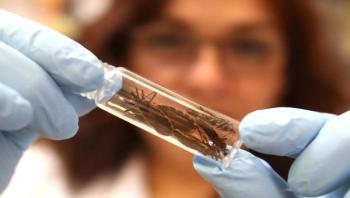
A deadly parasite that causes Chagas disease is widespread in a common Texas insect, according to a new study by University of Texas at El Paso (UTEP) researchers. The finding suggests that the risk of Texans contracting the disease may be higher than previously thought.

Dr. Zsuzsanna Jakab, World Health Organization (WHO) regional director for Europe, has issued the following statement: "The large influx of refugees and migrants to countries of the WHO European Region, which has escalated in the past few months, calls for an urgent response to their health needs. Actions are needed between and within countries as well as among sectors.

Between Aug. 26 and Aug. 31, 2015, the National IHR Focal Point for the Kingdom of Saudi Arabia notified the World Health Organization (WHO) of 22 additional cases of Middle East respiratory syndrome coronavirus (MERS-CoV) infection, including three deaths. Fifteen of these reported cases are associated with a MERS-CoV outbreak currently occurring in a hospital in Riyadh City.

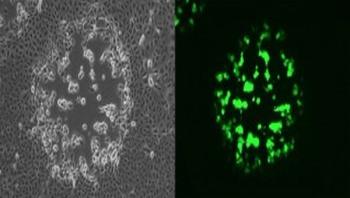
Almost all human beings are exposed to the respiratory syncytial virus, or RSV, before their second birthdays. For most, the symptoms mimic those of the common cold: runny nose, coughing, sneezing, fever. But in some very young infants -- and some older adults -- the disease can be serious, causing respiratory problems that require hospitalization and increase the risk of developing asthma later in life. Even in the hospital, doctors can't do much more than offer supportive care. But, with a new study, researchers at the University of Pennsylvania and colleagues have identified a subset of viral products that are responsible for eliciting a strong immune response against RSV in people who become infected. These products, called immunostimulatory defective viral genomes, or DVGs, were once thought to have no biological function. Now they are being eyed as a gateway through which the immune system could be coaxed to mount a defense to clear the body of the virus.

When a patient arrives at a hospital with a serious infection, doctors have precious few minutes to make an accurate diagnosis and prescribe treatment accordingly. Doctors' ability to act quickly and correctly not only makes a difference to the patient's outcome, it determines whether the infection spreads to other patients in the clinic, and can even contribute to the development of drug-resistant bacteria.