
News
Advertisement
Advertisement
Advertisement
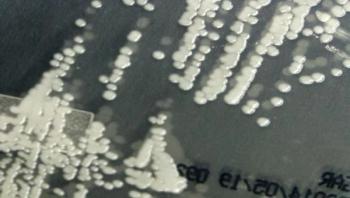
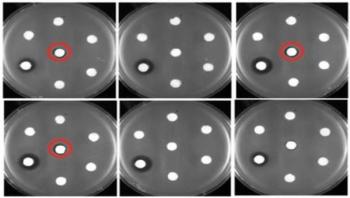
Like a dairy farmer tending to a herd of cows to produce milk, researchers are tending to colonies of the bacteria Escherichia coli (E. coli) to produce new forms of antibiotics - including three that show promise in fighting drug-resistant bacteria. The research, which will be published May 29 in the journal Science Advances, was led by Blaine A. Pfeifer, an associate professor of chemical and biological engineering in the University at Buffalo School of Engineering and Applied Sciences. His team included first author Guojian Zhang, Yi Li and Lei Fang, all in the Department of Chemical and Biological Engineering.
NIOSH and the National Personal Protective Technology Laboratory (NPPTL) announce the release of three documents related to respiratory protection in healthcare.
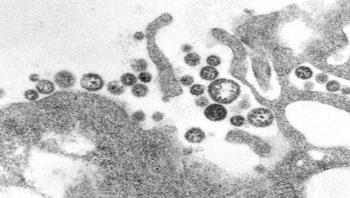
In light of the fatal case of Lassa fever in the U.S., the World Health Organization (WHO) offers the following information on this acute viral hemorrhagic illness.

Therapies administered via vascular access catheters are a mainstay of both acute and chronic medical treatment. In fact when all types of vascular catheters are combined, the category may well represent the largest type of invasive device used in healthcare. However their ubiquitous presence, ironically, makes it very difficult to measure with any degree of statistical precision their associated device utilization rates. The use of peripheral catheters (PIVs), for example, is so widespread in the United States that their use is obscured among other procedure codes, rather being coded separately, and recorded uniquely only in individual patient records. Aggregate data is absent in any administrative datasets. In general the frequency of catheter use must be inferred from the number of units sold by their various manufacturers. Today, this number reportedly exceeds 300 million but is at best an estimate.
If you have ever watched a fibrin sheath progress to a thrombus on the surface of a catheter -- a process that initiates instantly upon entry into the bloodstream and proceeds quickly, often in just minutes -- you will understand why the presence of contaminating bacteria on the surface of a catheter is something to be rigorously avoided. The rapidly forming fibrin sheath encases such surface bacteria, both shielding them and facilitating biofilm formation.

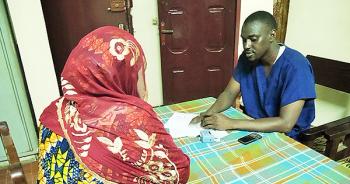
Dr. Diallo Thierno Souleymane, a doctor in Conakry, Guinea, recalls the day he received a phone call that changed his life. He had tested positive for Ebola. After surviving the disease and emerging from the Ebola treatment center, Souleymane was frightened to return to work and feared being stigmatized. He has since returned and advises other survivors to "have the courage to return to work and support the Ebola response."
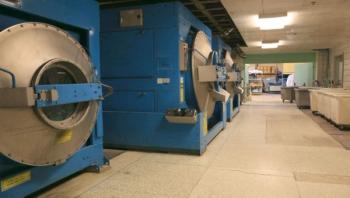
Infection Control Today spoke with Ruth Carrico, PhD, FSHEA, RN, CIC, regarding some of the most significant infection prevention-related issues in healthcare laundry department.
Advertisement
Advertisement
Trending on Infection Control Today
1
Hantavirus Concerns and Cruise Ship Hygiene: What Infection Preventionists Need to Know
2
Education, Advocacy, and Recognition: Malinda Elammari on the Future of Sterile Processing
3
IP LifeLine: Connecting With Specialized Recruiters and Navigating the Hiring Process
4