News

When fighting chronic viral infections or cancers, a key division of the immune system, known as CD8 T cells, sometimes loses its ability to effectively fight foreign invaders. Overcoming so-called T cell exhaustion is crucial to treating persistent infections but the underlying molecular mechanisms remain poorly understood. Now, a team of researchers at the La Jolla Institute for Allergy and Immunology report that the shift is masterminded in part by NFAT, short for Nuclear Factor of Activated T cells, and best known for its crucial role in getting CD8 T cells battle-ready. The findings from the lab of professors Patrick Hogan, PhD, and Anjana Rao, PhD, published in the Feb. 17, 2015 issue of the journal Immunity, lay the groundwork for novel treatments to restore immune function.

Viruses are masters of outsourcing, entrusting their fundamental function – reproduction – to the host cells they infect. But it turns out this highly economical approach also creates vulnerability. Researchers at Rockefeller University and their collaborators have found an unexpected way the immune system exploits the flu virus’ dependence on its host’s machinery to create new viruses capable of spreading infection. This discovery suggests a new approach to combating winter’s most unpleasant, and sometimes, deadly curse: the seasonal flu.

For decades, scientists have thought the bacteria that cause the bubonic plague hijack host cells at the site of a fleabite and are then taken to the lymph nodes, where the bacteria multiply and trigger severe disease. But UNC School of Medicine researchers discovered that this accepted theory is off base. The bacteria do not use host cells; they traffic to lymph nodes on their own and not in great numbers.

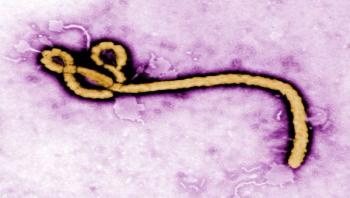
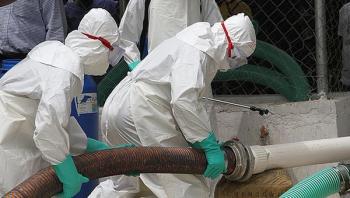
To determine how long Ebola virus could remain infectious in a body after death, National Institutes of Health (NIH) scientists sampled deceased Ebola-infected monkeys and discovered the virus remained viable for at least seven days. They also detected non-infectious viral RNA for up to 70 days post-mortem. The study, published in Emerging Infectious Diseases, suggests that Ebola transmission from deceased individuals may be possible for an extended period of time following death, underscoring the importance of using safe practices for handling corpses. The research also highlights oral swabbing of bodies as a reliable and safer alternative to riskier procedures for obtaining diagnostic samples.

Sophisticated germ fighters found in alligator blood may help future soldiers in the field fend off infection, according to new research by George Mason University. The study, published Feb. 11 in the scientific journal PLOS One, is the result of a fundamental research project supported by the Defense Threat Reduction Agency (DTRA) to find bacterial infection-defeating compounds in the blood of the crocodilian family of reptiles, which includes American alligators.

WHO’s social mobilization team is using radio to reach communities with information about how to prevent the spread of Ebola in Sierra Leone. “My work as a social mobilizer is to pass on key messages to convince people to stop the cultural and traditional practices that are fuelling the spread of Ebola,” says Zainab Akiwumi, who leads the World Health Organization (WHO)'s social mobilization team in Sierra Leone.

Researchers working at the Department of Energy’s SLAC National Accelerator Laboratory have captured the first X-ray portraits of living bacteria. This milestone, reported in the Feb. 11 issue of Nature Communications, is a first step toward possible X-ray explorations of the molecular machinery at work in viral infections, cell division, photosynthesis and other processes that are important to biology, human health and our environment. The experiment took place at SLAC’s Linac Coherent Light Source (LCLS) X-ray laser, a DOE Office of Science User Facility.

Purdue University research shows that standard cleaning procedures in retail delis may not eradicate Listeria monocytogenes bacteria, which can cause a potentially fatal disease in people with vulnerable immune systems. A study led by Haley Oliver, assistant professor of food science, found that 6.8 percent of samples taken in 15 delis before daily operation had begun tested positive for L. monocytogenes.

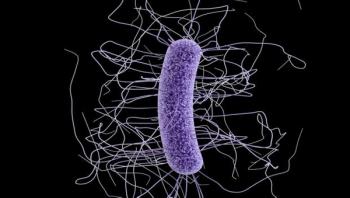
The alarming increase of antibiotic-resistant bacteria poses health and economic threats worldwide, with more than 2 million Americans infected by the bacteria each year. Now, a team of Indiana University chemists and biologists has been awarded a major grant to develop and use a chemical tagging method to better understand how bacteria build their cell wall, which is still the best target for new antibiotics.