
News
Advertisement
Advertisement
Advertisement

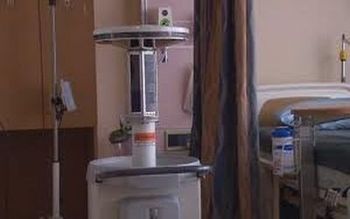
Loyola University Health System is the first academic medical center in Illinois to take disinfection to futuristic levels. Nicknamed Ralph by the housekeeping staff at Gottlieb Memorial Hospital and little Joe at Loyola University Medical Center, 3-foot upright cylindrical robots provide the finishing touches to room sanitation. A rotating telescopic head emits germicidal ultraviolet (UV) rays for 15 minutes in closed, unoccupied rooms to systematically kill germs.
Advertisement
Advertisement
Trending on Infection Control Today
1
Hantavirus Concerns and Cruise Ship Hygiene: What Infection Preventionists Need to Know
2
Education, Advocacy, and Recognition: Malinda Elammari on the Future of Sterile Processing
3
IP LifeLine: Connecting With Specialized Recruiters and Navigating the Hiring Process
4