
News
Advertisement
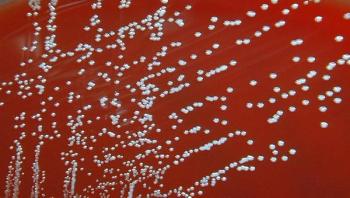
Brucellosis is an infectious disease of livestock that may be transmitted to farm workers or consumers of unpasteurized dairy products. Easy to spread and hard to detect, the bacteria that cause the illness, Brucella species, are considered potential bioterror weapons. Yet, precisely because Brucella species are so dangerous to handle, research on this important disease-causing agent, or pathogen, has lagged behind that of other infectious diseases.
Advertisement

Hospital superbugs enterococci arose from an ancestor that dates back 450 million years -- about the time when animals were first crawling onto land (and well before the age of dinosaurs), according to a new study led by researchers from Massachusetts Eye and Ear, the Harvard-wide Program on Antibiotic Resistance and the Broad Institute of MIT and Harvard. Published online today in Cell, the study authors shed light on the evolutionary history of these pathogens, which evolved nearly indestructible properties and have become leading causes of modern antibiotic-resistant infections in hospitals.
Advertisement
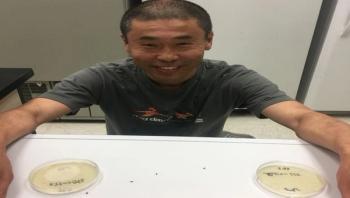
Many microbes are co-residents in our bodies, providing beneficial services in exchange for some of our resources. It’s a relationship called mutualism in which we provide a comfortable home, and they return the favor in myriad, interesting ways. Science is just beginning to scratch the surface of what the microbes in our bodies do for us. Until now, scientists have only had a murky understanding of how these relationships arise. Now Colin Dale and his colleagues at the University of Utah have an answer. It’s good news and bad news, germophobes: The bad news? Mutualistic bacteria start out by invading animal cells just like malevolent disease-causing bacteria do. The good news? Once they’re in, they calm down and play nice.

As the rate of Lyme disease grows rapidly across the United States, new research offers veterinarians a forecasting map that tells them which parts of the country are most at risk of Lyme disease infections in dogs, which could also help track and predict Lyme disease in people.
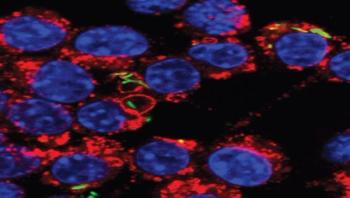
A natural mechanism by which our cells kill the bacterium responsible for tuberculosis (TB) has been discovered by scientists at the Francis Crick Institute, which could help in the battle against antibiotic-resistant bacteria. The findings, published in Cell Host & Microbe, could enable scientists to develop treatments for TB - one of the world's biggest health challenges - without the use of antibiotics, meaning that even antibiotic-resistant strains could be eliminated. The research was done in collaboration with scientists at the University of Oslo, the Max Planck Institute for Infection Biology in Germany and the Radboud Institute for Molecular Life Sciences in the Netherlands.
Advertisement
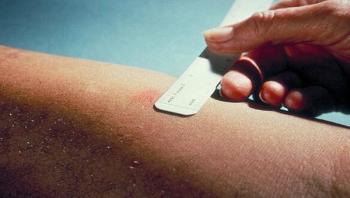
Timely and accurate identification of people with latent tuberculosis infection (LTBI) is important for controlling Mycobacterium tuberculosis (TB). There is no gold standard for diagnosis of LTBI. Screening tests such as interferon gamma release assays (IGRAs) and tuberculin skin test (TST) provide indirect and imperfect information. This systematic review by Auguste, et al. (2017) compared two types of IGRAs QuantiFERON®-TB Gold In-Tube test (QFT-GIT) and T-SPOT.TB with TST for identification of LTBI by predicting progression to a diagnosis of active TB in three subgroups: children, immunocompromised people, and those recently arrived from countries with high TB burden.

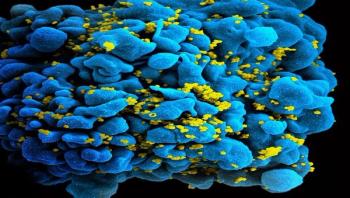
HIV appears to enlist the aid of nano-sized structures released by infected cells to infect new cells, according to a study by researchers at the National Institutes of Health. Known as extracellular vesicles (EVs), these bubble-like structures are made by many kinds of cells and, under most circumstances, are thought to ferry molecules from one cell to another, providing a means of communication. NIH scientists discovered that cells infected with HIV appear to produce EVs that manipulate prospective host cells to pass infection to other cells. The study appears in Scientific Reports.
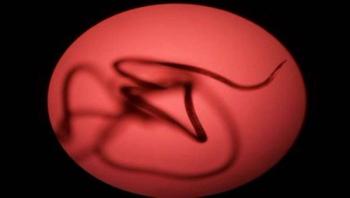
Recently published research from Iowa State University biomedical scientists details new methods for studying a parasitic nematode that sickens millions worldwide, a development that could lead to improved therapies.
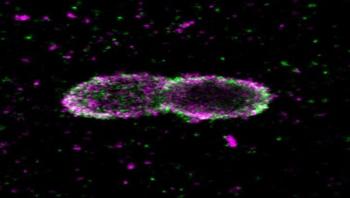
All bacteria have developed clever mechanisms for survival and propagation within host cells. Salmonella are a typical example: usually they hide in membrane-bound particles with only very few bacteria escaping to the cell's interior. Those escapees are extremely dangerous as they proliferate and spread at enormous speed. To stop such an invasion, cells have developed very effective defense strategies. An interdisciplinary team around professor Ivan Dikic (Institute of Biochemistry II) and professor Mike Heilemann (Institute of Physical and Theoretical Chemistry), both from Goethe University Frankfurt, now studied such a cellular defense mechanism by visualizing protein patterns at the near-molecular level.
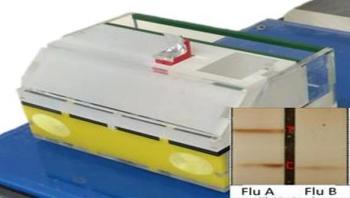
The threat of a major flu pandemic is a perennial concern. Now scientists have developed a fast and easy-to-use point-of-care diagnostic test that could one day help doctors and hospitals head off the rapid spread of the flu. They report their new device in ACS' journal Analytical Chemistry.
Mothers infected with malaria during pregnancy can pass more of their own cells to their baby and change the infant's risk of later infection, a new study shows. The study, from researchers at Fred Hutchinson Cancer Research Center and their colleagues, suggests that a mother's cells could directly act as part of her child's immune system, even after birth.

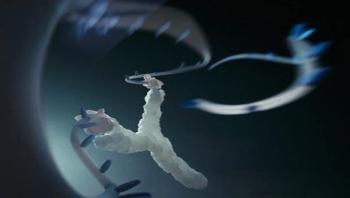
An international team of researchers from the University of Rome Tor Vergata and the University of Montreal has reported, in a paper published this week in Nature Communications, the design and synthesis of a nanoscale molecular slingshot made of DNA that is 20,000 times smaller than a human hair. This molecular slingshot could “shoot” and deliver drugs at precise locations in the human body once triggered by specific disease markers.
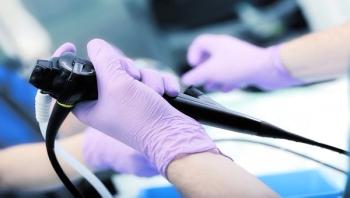
Several years following a widely publicized series of outbreaks related to contaminated and improperly reprocessed duodenoscopes, re-searchers are reporting that current techniques used to clean endoscopes for reuse are not consistently effective. However, some experts say that slow progress is underway.

Some central service (CS) professionals find comfort in knowing their chosen discipline provides them with a secure “job.” The fact is, though, that the dynamic, fast-paced and ever-evolving realm of CS/sterile processing delivers a challenging, yet rewarding career filled with rich opportunities for growth and advancement.

As an infection prevention consultant with 25-plus years of experience, I frequently audited healthcare facilities regarding proper reprocessing of their surgical, dental and/or endoscopic equipment. With each audit, I found healthcare professionals who had a strong desire to learn and adhere to best practices. This is important, as best practices should be adhered to in any profession because they reflect the values of that profession. In healthcare, adherence to sterilization and disinfection best practices ensures patient safety, as one of our greatest threats is healthcare-associated infections (HAIs). That said, I sometimes found it difficult to get everyone on board with compliance with national standards and guidelines, such as the Association for the Advancement of Medical Instrumentation (AAMI), the Association of periOperative Registered Nurses (AORN) and/or the Society of Gastroenterology Nurses and Associates (SGNA). In recent years, my efforts were reinforced with help from two very important organizations, the Joint Commission and the Centers for Disease Control and Prevention (CDC).
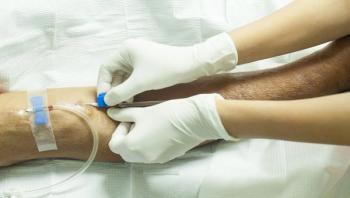
It has been more than 10 years since The New England Journal of Medicine published the Keystone project’s ground breaking work on reducing ICU CLABSIs using a central line insertion bundle. Since that time, this has become the absolute standard throughout healthcare settings in the United States. When it comes to completing the central line insertions checklist, many of us only accept “yes” and “yes with prompting” as possible responses. Our accrediting agencies expect this as a standard of practice.
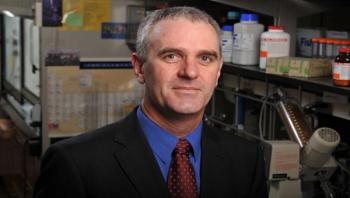
Researchers at the University of Notre Dame have discovered a way to make influenza visible to the naked eye, according to a new study in the Journal of the American Chemical Society. By engineering dye molecules to target a specific enzyme of the virus, the team was able to develop a test kit that emitted fluorescent light when illuminated with a hand-held lamp or blue laser pointer.
Advertisement
Advertisement