News


In advance of World AIDS Day, Dec. 1, 2016, the World Health Organization (WHO) has released new guidelines on HIV self-testing to improve access to and uptake of HIV diagnosis. According to a new WHO progress report, lack of an HIV diagnosis is a major obstacle to implementing the organization’s recommendation that everyone with HIV should be offered antiretroviral therapy (ART).

With 29,747 newly reported HIV infections in 2015, the EU/EEA notification rate is similar to recent years with an overall insignificant change from 6.6 per 100,000 population in 2006 to 6.3 in 2015 (adjusted for reporting delay).


A Washington State University (WSU) research team has successfully used a mild electric current to take on and beat drug-resistant bacterial infections, a technology that may eventually be used to treat chronic wound infections. The researchers report on their work in the online edition of npj Biofilms and Microbiomes.


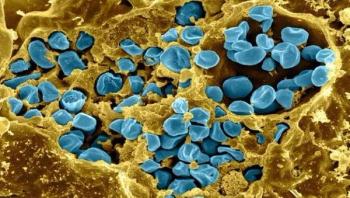
Staph bacteria colonize nasal passages through a newly discovered function for a primeval biochemical mechanism. The interior of the nose is a prime dwelling place for some forms of staph. More than one-third of the population has a chronic presence of Staphylococcus aureus in their nostrils and sinuses. From there, it can get onto the hands and other skin areas.


There is a continuous search for new, safe and relatively cheaper drugs with the advent of new diseases and increasing antibiotic resistance. Endophtyes having the potential to synthesize a wide array of bioactive compounds is an attractive alternative. They have the potential not only to synthesize plant metabolites but also a host of other natural products exhibiting a broad spectrum of structural and chemical diversities exhibiting biological activity and therefore can serve as lead molecules for designing new drugs

Congenital cytomegalovirus (CMV) infection can cause serious complications such as hearing difficulties and mental retardation in affected infants. A Japanese research team has discovered a new method for predicting congenital CMV infection during the prenatal period. This method is safe for both mothers and fetuses, and could potentially be adopted for general use. The findings were published on October 20 in the online version of Clinical Infectious Diseases.


As Zika spreads throughout the world, the call for rapid development of therapeutics to treat Zika rings loud and clear. Taking a step further in identifying a possible therapeutic candidate, a team of researchers at Duke-NUS Medical School (Duke-NUS), in collaboration with scientists from the University of North Carolina, has discovered the mechanism by which C10, a human antibody previously identified to react with the Dengue virus, prevents Zika infection at a cellular level.


A group of researchers at the Centre for Genomic Regulation (CRG) and the Pompeu Fabra University (UPF) in Barcelona, Spain, has developed a new technology that sheds light on the HIV infection and offers a first glance at the expression landscape of the HIV in the human genome.