
News
Advertisement
Advertisement
Advertisement

Swimming in a pool of syrup would be difficult for most people, but for bacteria like E. coli, it's easier than swimming in water. Scientists have known for decades that these cells move faster and farther in viscoelastic fluids, such as the saliva, mucus, and other bodily fluids they are likely to call home, but didn't understand why. Researchers from the School of Engineering and Applied Science and the School of Arts & Sciences have come together to find an answer. Their findings could inform disease models and treatments, or even help design microscopic swimming robots.

Advertisement
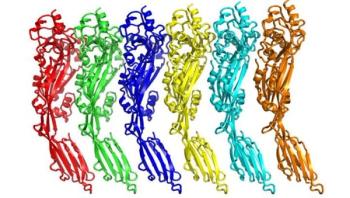
Scientists from the University of Leicester have for the first time created a detailed image of a toxin - called pneumolysin - associated with deadly infections such as bacterial pneumonia, meningitis and septicemia.
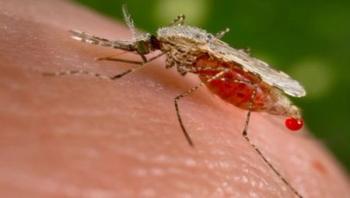
Using a groundbreaking gene editing technique, University of California scientists have created a strain of mosquitoes capable of rapidly introducing malaria-blocking genes into a mosquito population through its progeny, ultimately eliminating the insects' ability to transmit the disease to humans. This new model represents a notable advance in the effort to establish an antimalarial mosquito population, which with further development could help eradicate a disease that sickens millions worldwide each year.


As healthcare professionals we often wonder how much difference we truly make in the lives of our patients. I often wonder if I am doing everything that I possibly can to create a safe environment for every person around me - not just patients but my team as well. Maybe you are a nurse or tech who has wondered the same. Having worked in healthcare for the last nine years and endoscopy for the last four, I have met a variety of people each with their own story to tell. There are certainly moments that bring to light just how much impact we truly have in someone’s life. Errors often occur due to a lack of education or what I would refer to as follow-the-leader. Someone performs a task incorrectly and it continues until someone questions the process. That is where we come in. I want to encourage all of you to take that step forward and be the advocate that our patients so desperately need. Let me explain why I am so passionate about infection control and what we can do to continue creating a safer environment for all of our patients.
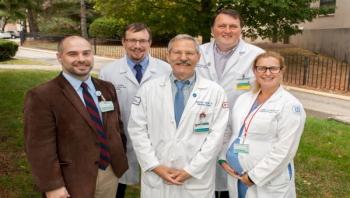
An expert in medical device-related infections is trying to raise awareness of the variability that exists in following guidelines designed to help prevent catheter-associated infections, particularly in arterial catheters (ACs) used in intensive care units (ICUs) and operating rooms (ORs). Leonard A. Mermel, DO, ScM, medical director of the epidemiology and infection control department at Rhode Island Hospital, and his colleagues recently published results of a survey (Cohen, et al. 2015) showing significant variability regarding how clinicians manage arterial catheters in ICU patients and that these practices may increase risk of infection.
The CDC’s Safe Healthcare Blog highlights experts’ views and involvement on tackling antibiotic resistance as a global threat.
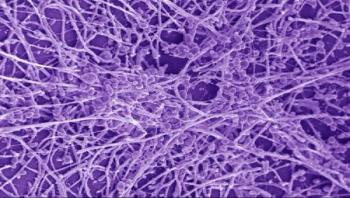
Researchers at the University of Toronto examined fungi in the mucus of patients with cystic fibrosis and discovered how one particularly cunning fungal species has evolved to defend itself against neighboring bacteria.
Advertisement
Advertisement