
News
Advertisement
Advertisement
Advertisement
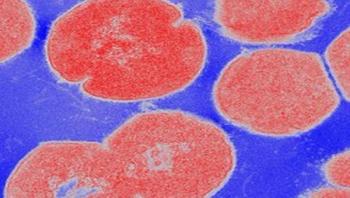
The most severe Group A Streptococcus (strep) infections are often the work of one particularly nefarious strain known as M1T1, named in part for the type of tentacle-like M protein projecting from the bacterium’s surface. While many previous studies proposed ways M1 might contribute to strep virulence, researchers at University of California, San Diego School of Medicine and Skaggs School of Pharmacy and Pharmaceutical Sciences have uncovered a new explanation that may trump all others: M1’s ability to hold off antimicrobial peptides - natural antibiotics that comprise one of the immune system’s front lines of defense.



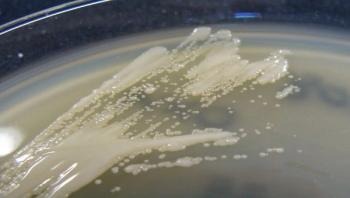
Acinetobacter baumannii can cause serious healthcare-associated infections (HAIs) and the incidence is increasing, with many strains now resistant to multiple antibiotic classes. The aims of this study by Ellis et al. (2015) were to examine factors associated with HAIs caused by antimicrobial-resistant as compared with antimicrobial-susceptible strains of A. baumannii and to investigate trends in the incidence of resistance over time.
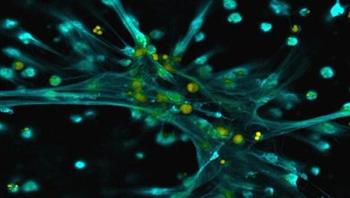
Researchers at University of California, San Diego School of Medicine and Skaggs School of Pharmacy and Pharmaceutical Sciences have found that the breast cancer drug tamoxifen gives white blood cells a boost, better enabling them to respond to, ensnare and kill bacteria in laboratory experiments. Tamoxifen treatment in mice also enhances clearance of the antibiotic-resistant bacterial pathogen MRSA and reduces mortality. The study was published Oct. 13 by Nature Communications.

A nationwide campaign to vaccinate 5.8 million children in Iraq against polio was concluded on Oct. 11, 2015 after a two-day extension recommended by the Ministry of Health to achieve maximum vaccination coverage. This effort to ensure that Iraq remains polio free also included the dissemination of life-saving information to 1.5 million households across the country on how to detect, prevent and treat cholera.
Someone recently asked me, “As a central sterile (CS) manager, what keeps you up at night – what is it that scares you the most relating to your department?” As I thought about all the possible things that could go wrong, from the mundane such as an autoclave breaking down to the exotic scenario such as a sprinkler system failure forcing me to reprocess all instruments, one thing jumped out in my mind and truly made me shudder. “Losing my staff,” I answered, “in fact, most CS managers would say the same.”
Q: Our sterile processing department (SPD) is sent explanted implants (screws, plates) to clean and sterilize so the patient can take them home. I have questioned this practice but do not have documentation to challenge this decision.
Advertisement
Advertisement