
News
Advertisement
Advertisement

U.S. hospitals recorded nearly 58,000 work-related injuries and illnesses in 2013, amounting to 6.4 work-related injuries and illnesses for every 100 full-time employees -- almost twice as high as the overall rate for private industry. In June, the Occupational Safety and Health Administration (OSHA) announced it was targeting some of the most common causes of workplace injury and illness in the healthcare industry, and is expanding its use of enforcement resources in hospitals and nursing homes to focus on patient or resident handling; bloodborne pathogens; workplace violence; tuberculosis, and slips, trips and falls.
Advertisement


Johns Hopkins University and DuPont have signed license and collaboration agreements allowing DuPont to commercialize a garment with innovative features from Johns Hopkins to help protect people on the front lines of the Ebola crisis and future deadly infectious disease outbreaks. DuPont intends to have the first of these garments available in the marketplace during the first half of 2016.

Antibiotic resistance is a growing global public health threat causing an estimated 23,000 deaths in America alone each year. One historically overlooked avenue by which antibiotic resistance can spread is through contact or consumption of contaminated water. For example, recent news articles have raised fears about human sewage tainted water at some of the venues for the 2016 Rio de Janeiro Olympics and the potential spread of resistant super-bugs. Unfortunately, the Brazilian Olympics is just one example of the growing scale of this problem. The situation is “a global health challenge,” says Peter Vikesland, professor of civil and environmental engineering at Virginia Tech.
One weapon in the armament against surgical site infections (SSIs) is the American College of Surgeons' National Surgical Quality Improvement Program (NSQIP), an essential tool to helping hospitals reduce the rate of SSIs and other complications that arise during and after patient procedures, says Clifford Ko, MD, MS, MSHS, FACS, director of the Division of Research and Optimal Patient Care at the American College of Surgeons (ACS). Ko will deliver the keynote address, “Achieving Quality Improvement in Patient Care,” at the OR Manager conference to be held Oct. 7-9, 2015 in Nashville, Tenn.
Recently a survey purported to demonstrate a causal association between reusable sharps containers and hospital acquired Clostridum difficile (C. diff) infections. It was published in the July 30 edition of Becker’s Hospital Review.
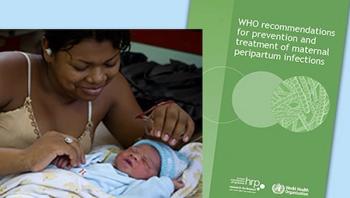

Anyone infected with HIV should begin antiretroviral treatment as soon after diagnosis as possible, the World Health Organization (WHO) has announced. With its "treat-all" recommendation, WHO removes all limitations on eligibility for antiretroviral therapy (ART) among people living with HIV; all populations and age groups are now eligible for treatment.
While scientists are continuously improving vaccinations to stop the spread of disease, many people continue to opt out. In a new review of the literature, researchers identified four types of people who decide not to vaccinate due to issues of complacency, convenience, confidence, and calculation, and offer strategies to address these issues. This study is published today in the new issue of Policy Insights from the Behavioral and Brain Sciences, a Federation of Associations in Behavioral and Brain Sciences (FABBS) journal published by SAGE.
Advertisement
Advertisement