
News
Advertisement
Advertisement
The University of Maryland School of Medicine and Novavax, Inc. announce that an investigational vaccine candidate developed by Novavax against the recently emerged Middle East Respiratory Syndrome Coronavirus (MERS-CoV) blocked infection in laboratory studies. UM SOM and Novavax also reported that a vaccine candidate against Severe Acute Respiratory Syndrome Coronavirus (SARS-CoV) developed by Novavax on a similar platform also inhibited virus infection. Researchers reported these findings in an article published in the April 13, 2014 issue of Vaccine.
Advertisement
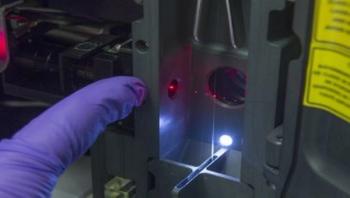
A gift from the Dr. G. Clifford & Florence B. Decker Foundation will enable Binghamton University biologists and their colleagues to conduct tests and research that will improve health outcomes for patients in Southern Tier hospitals with conditions ranging from ear infections to cancer.

As of April 23, 2014, the Ministry of Health (MOH) of Guinea has reported a cumulative total of 218 clinical cases of Ebola Virus Disease (EVD), including 141 deaths. To date, 191 patients have been tested for ebolavirus infection and 115 cases have been laboratory confirmed, including 72 deaths. In addition, 42 cases (34 deaths) meet the probable case definition for EVD and 61 cases (35 deaths) are classified as suspected cases. Twenty-six (26) health care workers (HCW) have been affected (18 confirmed), with 16 deaths (12 confirmed).
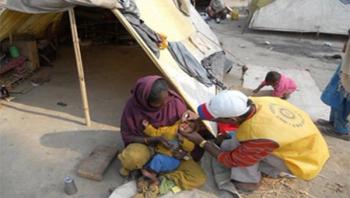
Four-year-old Pooja lives with her family in a jhuggi – a makeshift shanty made of corrugated iron – on a construction site on the outskirts of Kolkata, where her father has been working for the past few months. The settlement is crowded with temporary workers and their families living in sheds and slum dwellings in and around the buildings that are under construction. They don’t have access to toilets or safe drinking water.
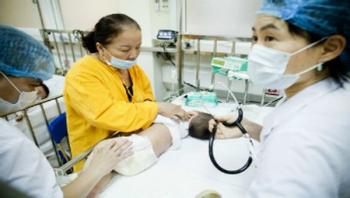
Nguyen Thi Thanh Thuy watches over her 2-year-old son as he takes quick, short breaths in a quarantined intensive care unit (ICU) at Hanoi’s National Pediatric Hospital. Like the 40 other children in the unit, Thuy’s son has a severe measles infection. Since the beginning of 2014, Viet Nam has reported more than 3,500 confirmed measles infections. More than 86 percent of those infected have not been immunized or their vaccination status is unknown.
Advertisement
Advertisement
Trending on Infection Control Today
1
APIC 2026: How Active Surveillance and Genomic Sequencing Helped Control a NICU CLABSI Outbreak
2
How to Teach Staff to Think Like an Infection Control Preventionist
3
From Exposure Event to Action Plan at APIC 2026: Providence Develops Playbook for Managing Large-Scale Patient Notifications
4
Cleaning Beyond Adherence at APIC26: Memorial Hermann Uses Multimodal Education to Strengthen Device Disinfection Practices
5