What happens when one disinfectant cannot satisfy every IFU? At AHE in New Orleans, Diane Cullen discusses weighted risk assessment, documenting difficult decisions, and why infection prevention and EVS need to work together.
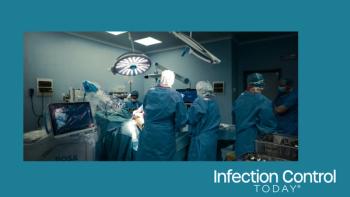
At AORN26 in New Orleans, a poster highlights surgical smoke risks, urging nationwide evacuation policies to protect health care workers and patients and strengthen nurse-led advocacy for safer operating rooms.
At the 2026 Association of periOperative Registered Nurse (AORN) Global Surgical Conference & Expo (AORN26) in New Orleans, Louisiana, a poster presentation is drawing attention to a persistent and often underestimated hazard in the operating room: surgical smoke. Titled “227 - Up in Smoke: It’s Time to Clear the Air and Call for Nation-wide Smoke Evacuation,” the work by Alexis J. Carlson, MSN, RN, CNOR, highlights the urgent need for standardized protections for health care workers and patients.
Carlson, an Operating Room Operations Officer in the United States Air Force Nurse Corps, in Las Vegas, Nevada, centers the discussion on the scale of exposure. More than 500,000 health care workers in the United States are exposed to surgical smoke plume each year, underscoring a significant occupational health and patient safety concern.
Surgical smoke is generated during procedures that use electrocautery or laser devices. While it is composed primarily of water vapor, approximately 5% consists of particulate matter, including chemicals, cellular fragments, pathogens, and other potentially harmful substances. This portion, though small, carries measurable health risks.
The poster emphasizes that there is no safe level of exposure. The amount of surgical smoke generated in a single day in the operating room has been compared to the equivalent of smoking 27 to 30 cigarettes. For health care personnel, repeated exposure has been associated with respiratory symptoms and other health concerns. For patients, especially during laparoscopic and robotic procedures, surgical smoke can impair visualization, increase absorption of toxic by-products, and elevate carboxyhemoglobin levels.
Despite the known risks, protections across the US remain inconsistent. Eighteen states have enacted mandatory surgical smoke evacuation laws, but no nationwide standard exists. This variation means safety measures can differ significantly by location, raising concerns about equity and consistency in care.
Carlson’s poster outlines evidence-based recommendations from AORN’s Perioperative Guidelines, which include promoting a smoke-free environment, using evacuation and filtration systems, applying respiratory precautions as secondary protection, and supporting education and policy development. Additional guidance from organizations such as the National Institute for Occupational Safety and Health, the National Fire Protection Association, and the American National Standards Institute reinforces the importance of minimizing exposure to surgical smoke.
The work also highlights ongoing efforts within the Defense Health Agency to implement surgical smoke evacuation policies across more than 700 military treatment facilities. This large-scale initiative reflects how coordinated policy efforts can drive change across diverse healthcare settings.
Nurses play a central role in advancing this issue. Awareness of surgical smoke risks remains limited among some healthcare providers, yet nurses are often the primary advocates for adopting safer practices and pushing for legislative action. The American Nurses Association Code of Ethics underscores the responsibility to advocate for safe environments for both patients and staff.
Carlson’s poster connects clinical evidence with policy and ethical considerations, pointing to the need for consistent protections regardless of geography. It also highlights the broader impact of nurse advocacy in shaping safer perioperative environments and influencing long-term improvements in occupational health standards.