What happens when one disinfectant cannot satisfy every IFU? At AHE in New Orleans, Diane Cullen discusses weighted risk assessment, documenting difficult decisions, and why infection prevention and EVS need to work together.
AORN26 highlights a colorectal SSI prevention bundle using evidence-based isolation techniques, interdisciplinary collaboration, and audit tracking to improve compliance and reduce infection risk in perioperative practice.
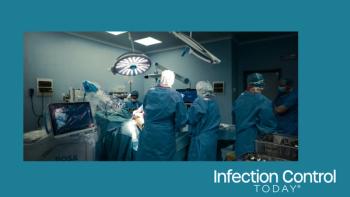
Surgical site infections (SSIs) remain a significant challenge in perioperative care, particularly in colorectal surgery, where the risk of contamination is inherently high. At the 2026 (Association of periOperative Registered Nurses) AORN Global Surgical Conference & Expo (AORN26), a team from Jesse Brown VA Medical Center presented a structured, evidence-based approach to reducing SSIs by translating research into consistent clinical practice. The poster was titled, “Evidence to Practice: Surgical Site Infection Prevention Bundle in Colorectal Surgery.”
Led by Mark William Crucero, MSN, RN, CNOR, CSSM, CNAMB, NE-BC, NPD-BC, PCCN, alongside colleagues Stephanie R. Marino, BSN, RN, CNOR; Dorissa Poliquit, BSN, RN, CNOR; and Vernalou Reyes, MSN, RN, the initiative focused on implementing a standardized colorectal isolation technique protocol supported by interdisciplinary collaboration and ongoing monitoring.
A Persistent and Increasing Risk
According to the Centers for Disease Control and Prevention, SSIs increased by 3% between 2022 and 2023, underscoring the need for renewed focus on prevention strategies.
In colorectal procedures, the risk is amplified due to the potential for cross-contamination during bowel surgery. While isolation techniques are widely recognized as effective in reducing this risk, they are not consistently implemented across all perioperative settings.
At the Jesse Brown VA Medical Center, this gap presented an opportunity. The perioperative team identified that a standardized isolation protocol had not yet been fully adopted, creating variability in practice and potential risk for patients.
Building a Framework for Change
To address this, the team used the Johns Hopkins Evidence-Based Practice Model to guide implementation. This structured approach allowed the team to move beyond awareness of best practices and focus on integrating them into daily workflows.
The Nursing Professional Development Practitioner (NPDS) and colorectal surgery nursing team conducted a thorough review of current literature on bowel isolation techniques. Collaboration with general and colorectal surgeons ensured that selected interventions were both evidence-based and clinically feasible.
This alignment between nursing and surgical teams was critical. Successful implementation required shared understanding, agreement on protocols, and commitment across disciplines.
Education and Engagement as Key Drivers
Before implementing the new protocol, the team conducted preliminary education sessions to introduce the practice changes and reinforce the rationale behind them.
Education focused not only on what needed to change, but also on why those changes mattered. By connecting evidence to patient outcomes, the team helped build buy-in and reduce resistance to new workflows.
This step is particularly important in perioperative environments, where competing priorities and established habits can make change difficult.
Integrating Sterile Processing Into the Solution
A notable aspect of the initiative was the inclusion of Sterile Processing Service (SPS) in the implementation process.
The team collaborated with SPS to develop a dedicated closing mayo tray, designed to support the colorectal isolation technique. This ensured that the necessary instruments were available and standardized, reducing variability and supporting compliance.
For infection prevention professionals, this highlights the importance of involving sterile processing early in practice changes. Instrumentation and tray configuration are integral to successful implementation of surgical protocols.
Monitoring Compliance and Outcomes
To sustain the initiative, the team developed an audit tool to track compliance with the isolation protocol.
This allowed for real-time feedback and identification of gaps, ensuring that deviations from the protocol could be addressed promptly.
In addition to process measures, the team committed to monitoring SSI rates through quarterly reports. This dual focus on compliance and outcomes provides a comprehensive view of the initiative’s impact.
Implications for Infection Prevention and Perioperative Teams
The work presented at AORN 2026 reinforces several key principles for infection prevention professionals.
First, evidence alone is not enough. Translating research into practice requires structured frameworks, interdisciplinary collaboration, and consistent education.
Second, standardization is critical. Variability in practice increases risk, particularly in high-stakes procedures such as colorectal surgery.
Third, successful implementation depends on engaging all stakeholders, including surgeons, nurses, and sterile processing teams.
A Scalable Approach to SSI Prevention
While this initiative focused on colorectal surgery, the approach is broadly applicable across surgical specialties.
Using evidence-based models, integrating multidisciplinary teams, and establishing clear monitoring processes can help health systems reduce SSIs and improve patient outcomes.
As infection prevention continues to evolve, the ability to move from evidence to consistent practice will remain a defining factor in success.
The colorectal SSI bundle presented at AORN 2026 offers a practical example of how that transition can be achieved, demonstrating that meaningful improvement is possible when teams align around shared goals and evidence-based care.