Finding infections earlier is only part of the work. At IDWeek 2026, David Weber, MD, MPH, explored how broader surveillance and emerging technologies could help infection preventionists spend more time supporting safer care.
This week in infection prevention: Kenya’s Bundibugyo virus response shows why execution, not just planning, determines outcomes, and France reported the first known human Shamonda virus infection. Our roundup also covers brucellosis, blood donor screening, and long-acting HIV antibody findings from IDWeek 2026.
A 2026 IDWeek poster details how respiratory cultures and whole genome sequencing clarified a NICU MRSA outbreak, with targeted prevention measures followed by at least 6 months without additional bacteremias or related respiratory clusters.
Researchers recovered a carbapenemase-producing organism from the shaft of a hospital drain auger, prompting calls for standardized reprocessing protocols and further investigation into maintenance equipment as a potential source of environmental dissemination.
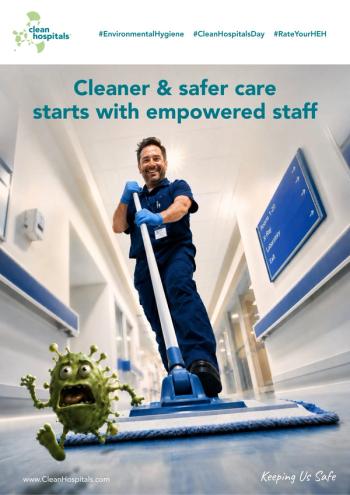
Clean Hospitals President Alexandra Peters, PhD, explains how training, meaningful support, and stronger collaboration with infection prevention teams can empower environmental services staff and strengthen patient safety.
This week in infection prevention: Kenya's imported Ebola case showed how fever screening can miss an ill traveler, Florida's dengue outbreak reached 296 local cases, and new guidance underscores that missed surfaces and shared equipment fuel AMR risk. Our weekly roundup covers these stories and more.
This week's coverage in Infection Control Today centered on a common thread: the systems, partnerships, and data that let infection prevention teams catch problems before patients are harmed.
At IDWeek 2026, Rachel Sidebottom discusses research exploring phage-antibiotic combinations, the potential for predictive modeling, and an investigation identifying an ST5 strain of nontoxigenic Corynebacterium diphtheriae circulating in Albuquerque.