What happens when one disinfectant cannot satisfy every IFU? At AHE in New Orleans, Diane Cullen discusses weighted risk assessment, documenting difficult decisions, and why infection prevention and EVS need to work together.
At AORN 2026, experts highlight how dedicated perioperative infection preventionists reduce surgical site infections, improve staff engagement, and drive ROI through standardized practices, real-time education, and data-driven strategies.
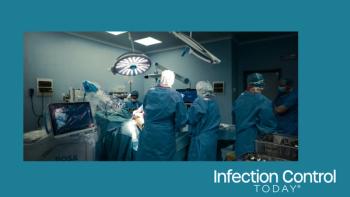
At the 2026 AORN Global Surgical Conference & Expo (AORN26), infection prevention leaders from across the country came together to highlight a growing priority: the need for dedicated infection preventionists (IPs) in the perioperative space and the measurable return on investment (ROI) they can deliver.
Representing health systems from Washington to Florida, the poster presenters, Charles Vickery Jr, MSN, RN, CIC, CRCST, infection prevention supervisor for Advent H Celebration, Florida; Danielle Gregory, MPH, CIC, CPHQ, IP for Providence Regional Medical Center Everett in Everett, Washington, and Jeanette H. Harris, MS, MSM, MT(ASCP), CIC, FAPIC, Infection Prevention - Surgical Services for Evergreen Healthcare, in Enumclaw, Washington, shared a common challenge—elevated surgical site infection (SSI) rates and the need to bring standardized infection ratios (SIRs) back below benchmark levels.
Their solution was clear in their poster, “Dedicated Infection Preventionist in Surgical Service-Return on Investment Argument”: embedding IPs directly within perioperative teams to provide focused oversight, real-time education, and deeper insight into daily practices.
“We are looking at our SSI cases, and when we are seeing an SIR above 1, that's always a question of how do we get that back down below, [and] where we want it to be? And having a dedicated IP in that space is the way to get that engagement, just-in-time education, and seeing what's happening, scratching below the surface and not just keeping it superficial,” Gregory explained. A dedicated IP allows for “just-in-time education” and a closer look at workflow gaps that might otherwise go unnoticed.
Beyond reducing SSIs, presenters emphasized the importance of consistency across procedures. From cesarean sections to complex abdominal surgeries, standardized practices ensure all patients receive the same level of infection prevention, regardless of setting or team.
One unexpected benefit of embedding IPs in the operating room (OR) environment was increased frontline engagement. Regular rounding and visibility helped build trust with perioperative staff, who began seeking out IPs as a resource for questions and problem-solving. “I like to joke that IP was kind of the Department of Weird Questions. So, when people don't know who to ask or what to ask, they go, ‘Oh, there's an IP, I'll ask them.’ So, I would say that that was something that I wasn't fully expecting when we started our work in this space, but it's been a really significant benefit of having that connection,” Gregory noted, underscoring their expanding role as accessible experts.
The discussion also highlighted a critical operational lesson: Infection prevention efforts must be sustained. In one example, SSI rates rose again when dedicated IP coverage was pulled, reinforcing that these roles are not short-term fixes but essential, ongoing investments.
Vickery encouraged IPs to quantify their impact in financial terms, linking SSI reductions to cost savings, value-based purchasing metrics, and quality ratings. With SSIs accounting for a significant portion of health care-associated infections, he argued, infection prevention programs must advocate for resources that match the scale of the problem.
“One of the things IPs forget to do is to add, to attach, a $1 sign to the work that we do, and it's very difficult, but if you can show upper leadership that you are a beneficial addition to your infection prevention program, you get a lot of buy-in. The surgeons call me now if they see a problem, which is awesome,” Harris said.
Ultimately, the message was clear: a “laser focus” on perioperative infection prevention not only improves patient outcomes but strengthens organizational performance, making dedicated IPs a strategic necessity, not a luxury.