|Articles|September 21, 2010

ASSE to Address PPE Issues, Safety Threats in Healthcare

The American Society of Safety Engineers (ASSE) will host a virtual symposium October 19-21 on how to address the risk and hazards healthcare workers and their employers deal with every day.

The ASSE "Occupational Safety in the Healthcare Industry" virtual symposium will feature the U.S. National Institute of Occupational Safety and Health (NIOSH) administrator Dr. John Howard as the keynote speaker. Also featured will be speakers from the Social Security Administration, Christiana Care Health Systems, Department of Veterans Affairs, Lockton Companies, California Pacific Medical Center, Memorial Hermann Healthcare System, Carolinas HealthCare System Corporate Security, ECRI, and the University of Louisville Hospital as they share solutions and approaches one can use to enhance safety in a healthcare setting.

The virtual symposium will feature topics including patient handling, emergency preparedness and general safety concerns particular to a healthcare environment. Speakers will discuss ways to reduce injuries associated with patient handling; methods for reducing exposure to infectious disease; strategies for preventing violence in the workplace; how to prepare and respond to emergency situations unique to the healthcare environment; and, best practices around the use of personal protective equipment (PPE) unique to the healthcare setting.

During the three-day live learning ASSE virtual symposium, attendees can view and listen to sessions live, chat with speakers and earn CEUs, all from a computer. All sessions are recorded and will be available to view at any time with a computer and a connection to the internet. In addition, the ASSE virtual symposium is built around a social networking system, accessible only to speakers and registered attendees and provides session slides, e-books, articles and proceedings papers, along with a variety of different supplemental learning materials that pertain to the symposium theme. Attendees can earn 1.0 CEUs. The symposium also provides a virtual expo where attendees can browse through a variety of vendor products and services.

To register, visit http://www.asse.org/education/healthcare/index.php .


Related to this article

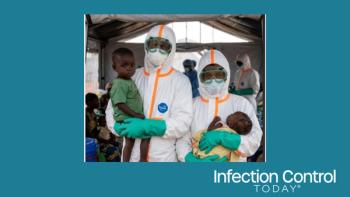
Infection preventionists in full PPE with children in DRC.  (Image credit: author with AI)
Nearly 4 months into the DRC's Bundibugyo virus disease outbreak, some indicators suggest transmission may be slowing. But shifting hotspots, treatment-center capacity problems, community deaths, and incomplete surveillance data show why national case totals alone cannot determine whether containment has been achieved.
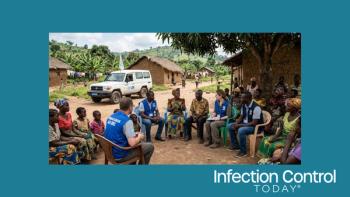
Health care workers from the US speaking with other health care workers in DRC.  (Image credit: author with AI)
Is the Ebola outbreak in the DRC getting better? The answer depends on which numbers you examine. Several important indicators are moving in the right direction, including slower case growth and a declining Rₜ. But major gaps remain in contact tracing, testing, community deaths, safe burial coverage, and treatment capacity in some of the hardest-hit areas. ICT takes a deeper look at the latest outbreak data and why the numbers suggest cautious optimism, not victory.
Dyan Troxell, MSN, RN, director of clinical education at HandCraft Linen Services; J.J. Odom, MBA, CHESP, CMIP, T-CHEST, university director of buildings and grounds for UConn Health and chair-elect of the AHE Board; and Jenna Rivers, MPH, CPH, CIC, manager of infection prevention and control at Moffitt Cancer Center in Tampa, Florida.
At AHE Exchange 2026, ICT spoke with experts representing commercial laundry services, EVS, and infection prevention about the systems behind a successful reusable linen program. They discuss linen quality, reject rates, unnecessary waste, frontline education, data, PAR levels, infection prevention oversight, and why strong relationships between health care facilities and their laundry providers matter.
A group of students raising their hands in class during a lecture  (Adobe Stock 292282454 by Mediteraneo
How do you celebrate an infection that never happened? That's one of the unusual challenges infection preventionists share with teachers. Both can spend their careers changing outcomes they may never see. Both educate people who don't always want to listen. Both are second-guessed. Both face burnout. And both must somehow keep remembering why they started.