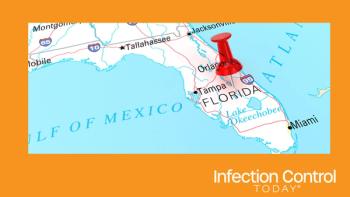
Florida’s dengue outbreak highlights the importance of recognizing symptoms, identifying warning signs, and preventing mosquito bites. Ubong Johnson, MD, explains local transmission, diagnostic testing, treatment, and practical prevention measures.
EL SEGUNDO, Calif. -- Computer Sciences Corporation announced today that DynPort Vaccine Company LLC, a joint venture between CSC and Porton International, a leading vaccine development company focused on biodefense vaccines, has completed Phase I testing of the safety and immunogenicity of an improved cell-cultured smallpox vaccine (CCSV).
In this trial, 100 percent of 350 volunteers exhibited a positive response to either the CCSV or the historic calf lymph-produced smallpox vaccine (Dryvax). However, the incidence of vaccine-related fatigue, application site rash, increased temperature, headache, lymphangitis and nausea was at least 8% less common for volunteers receiving CCSV than Dryvax.
DVC is a biopharmaceutical development company dedicated to the development and licensure of safe and efficacious biodefense vaccines for the Department of Defense (DoD) through the Joint Vaccine Acquisition Program (JVAP). This is accomplished through the design and implementation of strategies for advanced development by partnering with government and industry.
"Protection against potential future biological attacks continues to be a key concern of our nation's leaders," said DVC president Terry Irgens. "The availability of adequate stocks of effective and safe smallpox vaccine that meets modern manufacturing standards is of paramount importance. At DVC, our mission remains the development and manufacture of biodefense vaccines to protect the nation's operating forces and citizens. We do this by applying modern technologies and our established expertise to the development of FDA-compliant vaccines."
DVC's new smallpox vaccine, derived from the historic New York Board of Health strain that was licensed in the US and previously used by the DoD, is produced using stringent modern manufacturing methods and grown in the highly characterized MRC-5 human lung cells.
The Phase I trial of CCSV was recently completed at the University of Kentucky's Chandler Medical Center. The trial focused on the safety and immunogenicity of CCSV in vaccinia-naive and vaccinia-experienced healthy volunteers. The double-blind study randomized 350 volunteers into one of five cohorts. The first four cohorts were volunteers randomly assigned to receive either undiluted CCSV or Dryvax. The fifth study cohort provided preliminary information on the safety and efficacy of CCSV dilutions of up to one part per fifty. In this cohort, all but one of 100 volunteers developed a positive response to vaccination. This volunteer received a 1:25 dilution of CCSV.
Porton International, Inc., is a member of the Beaufour-Ipsen Group of companies.
Computer Sciences Corporation is one of the world's leading information technology (IT) services companies.
Source: Computer Sciences Corporation