|Articles|June 7, 2012

Georgia-Pacific Professional Seeks "Great American Worker" Applicants

Time is running out to nominate yourself for the Brawny Industrial® Great American Worker contest. More than 160 dedicated workers across the nation have already entered for the chance to hold the title and win a 2012 Ford® F-150 truck. 

Georgia-Pacific Professional is searching for this years Great American Worker who exemplifies excellence in worker safety, productivity and community involvement. Nominations will be accepted until July 9, 2012, and can be submitted by visiting http://www.brawnyindustrialGAW.com.

This contest offers a great way to provide workers across the country the opportunity to be recognized for their achievements both in their workplace and in their community, says Bill Tracey, vice president of the wiper category for Georgia-Pacific Professional. We encourage interested participants to submit nominations for consideration. The top 10 finalists will be voted upon by the public.
  
The Grand Prize winner will be announced in early October.
 
For complete contest rules and regulations visit: http://www.brawnyindustrialGAW.com.


Related to this article

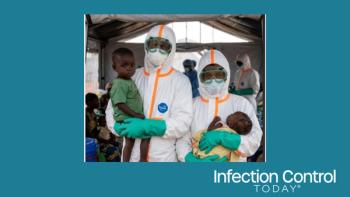
Infection preventionists in full PPE with children in DRC.  (Image credit: author with AI)
Nearly 4 months into the DRC's Bundibugyo virus disease outbreak, some indicators suggest transmission may be slowing. But shifting hotspots, treatment-center capacity problems, community deaths, and incomplete surveillance data show why national case totals alone cannot determine whether containment has been achieved.
Dyan Troxell, MSN, RN, director of clinical education at HandCraft Linen Services; J.J. Odom, MBA, CHESP, CMIP, T-CHEST, university director of buildings and grounds for UConn Health and chair-elect of the AHE Board; and Jenna Rivers, MPH, CPH, CIC, manager of infection prevention and control at Moffitt Cancer Center in Tampa, Florida.
At AHE Exchange 2026, ICT spoke with experts representing commercial laundry services, EVS, and infection prevention about the systems behind a successful reusable linen program. They discuss linen quality, reject rates, unnecessary waste, frontline education, data, PAR levels, infection prevention oversight, and why strong relationships between health care facilities and their laundry providers matter.