|Articles|September 30, 2017

Handling Clean Linen in a Healthcare Environment

Hygienically Clean Healthcare certification demonstrates linen and uniform services companies’ commitment to cleanliness through independent, third-party laundry inspection and quantified microbial testing. Inspection and re-inspection verify that items are maintained, washed, dried, ironed, packed, transported and delivered using best management practices (BMPs) to meet key disinfection criteria. Between scheduled and supplemental inspections, ongoing microbial testing quantifies cleanliness and indicates laundry process adjustments. Certification requirements are based on international standards for processing healthcare linens and garments.


This Whitepaper explores the details of TRSA's Hygienically Clean Healthcare program standards, which are certified through laundry plant inspection and third-party, quantified biological testing. Inspection and re-inspection verify that items are washed, dried, ironed, packed, transported and delivered using best management practices (BMPs) to meet key disinfection criteria. Between inspections, ongoing microbial testing quantifies cleanliness and adherence to
BMPs.

  • Learn why safeguarding clean linen is an imperative

  • Review how to avoid healthcare linen contamination by perfecting the process

  • Discover how bed-changing policies are key to waste control

Hygienically Clean Healthcare certification demonstrates linen and uniform services companies commitment to cleanliness through independent, third-party laundry inspection and quantified microbial testing. Inspection and re-inspection verify that items are maintained, washed, dried, ironed, packed, transported and delivered using best management practices (BMPs) to meet key disinfection criteria. Between scheduled and supplemental inspections, ongoing microbial testing quantifies cleanliness and indicates laundry process adjustments. Certification requirements are based on international standards for processing healthcare linens and garments.



Related to this article

Donald Sipp, Jr, MBA, RESE, CHESP, CHTI-2, CMIP, PMP, and David Green  (Image credit: author)
“Cutting” waste shouldn’t mean cutting people. At AHE Exchange26, David Green and Donald Sipp explored how EVS departments can improve performance by strengthening workplace culture, empowering employees, eliminating inefficient processes, and understanding EVS’s critical role in patient throughput. One case study showed bed turnaround times falling from nearly 2 hours to less than an hour, but the larger lesson wasn't simply about speed. High-performing EVS operations begin with a strong foundation.
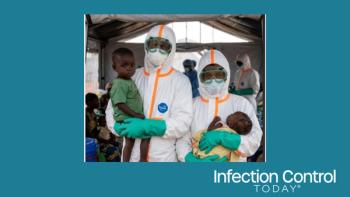
Infection preventionists in full PPE with children in DRC.  (Image credit: author with AI)
Nearly 4 months into the DRC's Bundibugyo virus disease outbreak, some indicators suggest transmission may be slowing. But shifting hotspots, treatment-center capacity problems, community deaths, and incomplete surveillance data show why national case totals alone cannot determine whether containment has been achieved.