|Articles|March 27, 2013

HHS Proposes Revision to Respirator Certification Fees

The Department of Health and Human Services (HHS) proposes to revise the fee structure established in 42 CFR Part 84 (Part 84), currently used by the National Institute for Occupational Safety and Health (NIOSH), within the Centers for Disease Control and Prevention (CDC) to charge respirator manufacturers for the examination, inspection and testing of respirators which are submitted to NIOSH for the purpose of creating or modifying a certificate of approval.

Existing regulations in Part 84, Subpart C--Fees reflect prices for respirator testing and approval that were promulgated in 1972, and have not kept pace with the actual costs of providing these services that benefit respirator manufacturers. The proposed rule is designed to establish fees for the following:

- reviewing applications submitted to NIOSH

- issuing a certificate of approval

- modifying a certificate of approval

- maintaining a certificate of approval

- performing specific, standard laboratory tests which are requested by applicants

- developing and/or performing novel tests which are required to evaluate respirator performance

- qualifying applicant respirator product sites and quality systems

- verifying quality system performance through site quality audits

- verifying commercially available respirator performance through product quality audits

- replacing testing equipment

- providing and maintaining laboratories and office space.
 

NIOSH will hold a public meeting to allow stakeholders to present information the impact of an increase on respirator fees on individual respirator manufacturers, the respirator market, or on those industries that rely on NIOSH-approved respiratory equipment. The meeting will be held on April 30, 2013, from 10 a.m. to 4 p.m. EDT, or after the last public commenter has spoken, whichever occurs first. Additional meeting information can be found at: www.cdc.gov/niosh/npptl



Related to this article

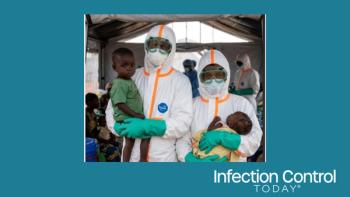
Infection preventionists in full PPE with children in DRC.  (Image credit: author with AI)
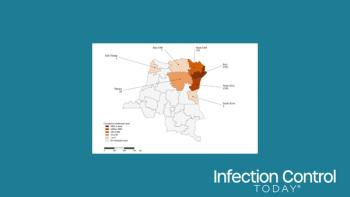
Nearly 4 months into the DRC's Bundibugyo virus disease outbreak, some indicators suggest transmission may be slowing. But shifting hotspots, treatment-center capacity problems, community deaths, and incomplete surveillance data show why national case totals alone cannot determine whether containment has been achieved.
Health care workers from the US speaking with other health care workers in DRC.  (Image credit: author with AI)
Is the Ebola outbreak in the DRC getting better? The answer depends on which numbers you examine. Several important indicators are moving in the right direction, including slower case growth and a declining Rₜ. But major gaps remain in contact tracing, testing, community deaths, safe burial coverage, and treatment capacity in some of the hardest-hit areas. ICT takes a deeper look at the latest outbreak data and why the numbers suggest cautious optimism, not victory.
Dyan Troxell, MSN, RN, director of clinical education at HandCraft Linen Services; J.J. Odom, MBA, CHESP, CMIP, T-CHEST, university director of buildings and grounds for UConn Health and chair-elect of the AHE Board; and Jenna Rivers, MPH, CPH, CIC, manager of infection prevention and control at Moffitt Cancer Center in Tampa, Florida.
At AHE Exchange 2026, ICT spoke with experts representing commercial laundry services, EVS, and infection prevention about the systems behind a successful reusable linen program. They discuss linen quality, reject rates, unnecessary waste, frontline education, data, PAR levels, infection prevention oversight, and why strong relationships between health care facilities and their laundry providers matter.
A group of students raising their hands in class during a lecture  (Adobe Stock 292282454 by Mediteraneo
How do you celebrate an infection that never happened? That's one of the unusual challenges infection preventionists share with teachers. Both can spend their careers changing outcomes they may never see. Both educate people who don't always want to listen. Both are second-guessed. Both face burnout. And both must somehow keep remembering why they started.