

News|Videos|March 6, 2026
The Hidden Guardians of Dental Infection Prevention
Author(s)Tori Whitacre Martonicz, MA
Advertisement
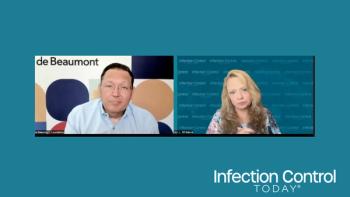
(This is the first of 3 installments of ICT’s interview with Sherrie Busby, EDDA, CDSO, CDIPC, dental assistant speaker and trainer, and a member of the Infection Control Today® (ICT®) editorial advisory board.)
Dental Assistants Recognition Week shines a spotlight on a group of health care professionals whose work is critical to patient safety but often goes unnoticed. According to Sherrie Busby, EDDA, CDSO, CDIPC, dental assistant speaker and trainer, and a member of the Infection Control Today® (ICT®) editorial advisory board, dental assistants play a vital role in maintaining infection prevention standards throughout the dental care process.
“Dental assistants do more than just assist the doctor,” Busby said. “We are responsible for setting up the rooms, breaking down the rooms, and following the whole chain of infection control from start to finish.”
Many patients assume dental assistants and dental hygienists perform the same duties. Busby explained that the roles are distinct and that dental assistants frequently manage many of the behind-the-scenes infection control tasks that make dental visits safe.
“The dental assistant is the one primarily that cleans the instruments, gets them sterilized, and repackages them for the next patient,” Busby said. “A lot of things happen behind the scenes that patients never see.”
Those unseen processes include preparing treatment rooms, sterilizing instruments, disinfecting surfaces, and ensuring infection prevention protocols are followed between each patient visit. According to Busby, the process can appear effortless from the patient’s perspective, but it requires constant coordination.
“When the patient comes in and sits down, it looks like magic,” Busby said. “But there’s a dental assistant running around with their hair on fire making all that stuff happen.”
Dental environments present unique infection prevention challenges. Procedures frequently involve aerosols, saliva, and close patient contact. Busby said personal protective equipment, or PPE, is one of the most important safeguards for both patients and dental teams.
“The dental team’s best defense is proper use of PPE,” Busby said. “You’ve got two layers of clothing, gloves, a mask covering your face, and safety glasses. It can feel like a hazmat suit sometimes, but it protects both the patient and the provider.”
In addition to PPE, strict cleaning and disinfection practices are essential. Busby emphasized that pathogens can survive for extended periods on surfaces if proper protocols are not followed.
“Just the flu can live 48 hours on a surface,” Busby said. “COVID-19 can live for weeks, and C diff can live up to five months on a surface. Patients may not even know they are carrying something, so everything has to be cleaned carefully.”
Dental assistants are responsible for ensuring surfaces and instruments are disinfected and sterilized according to established protocols. That includes reprocessing instruments, packaging them properly for sterilization, and preparing them for the next procedure.
“There’s an entire process behind the scenes,” Busby said. “We clean instruments, package them correctly, run them through sterilization, and prepare them again for patient care.”
Despite their extensive responsibilities, Busby noted that dental assistants often enter the workforce without formal infection control training. In many states, individuals can begin working in dental practices while learning on the job.
“In most states, you can work and perform infection control duties without formal training,” Busby said. “So people are learning from each other on the job, and sometimes that means bad habits get passed along too.”
Busby believes Dental Assistants Recognition Week is an important opportunity to acknowledge both the responsibilities and contributions of the profession.
“This week is when we celebrate dental assistants,” she said. “Personally, I think they should be celebrated 365 days a year.”
As dental practices continue to strengthen infection prevention protocols and adopt new technologies, dental assistants remain essential to protecting patients and maintaining safe clinical environments.
Advertisement
Related Content
Advertisement



Advertisement
Advertisement
Trending on Infection Control Today
1
AI in Infection Prevention: How IPs Can Use Artificial Intelligence for Surveillance, Training, and Patient Safety
2
Lost in Translation: Why CBIC’s New Education Rules Are Raising Questions in the Field
3
What Outbreak Metrics Can and Cannot Tell Us About the Ebola DRC Response
4
Public Health Under Pressure: Brian Castrucci, DrPh, on Cyclospora, Trust, and the Cost of Underinvestment
5