


Videos
Latest News
Advertisement
Latest Videos


Shorts
0:34
Stop Guessing: Are You Paying Enough for Talent?
4 months ago
0:39
Transitioning Out of Public Health Layoffs
4 months ago
0:48
How Hospitals Calculate Your IPC Salary
4 months ago
0:46
Why Vetting Is the Most Important Part of Hiring
4 months ago
0:41
The Health Care Salary Gap Explained
4 months ago
1:06
Free Tool to Check Your Salary Against the Market
5 months ago
0:44
How to Negotiate Your Worth as an Infection Preventionist
5 months ago
0:40
Contagious Conversations: Why You Shouldn't Have to Lose Your Identity to Grow Your Career
7 months ago
0:36
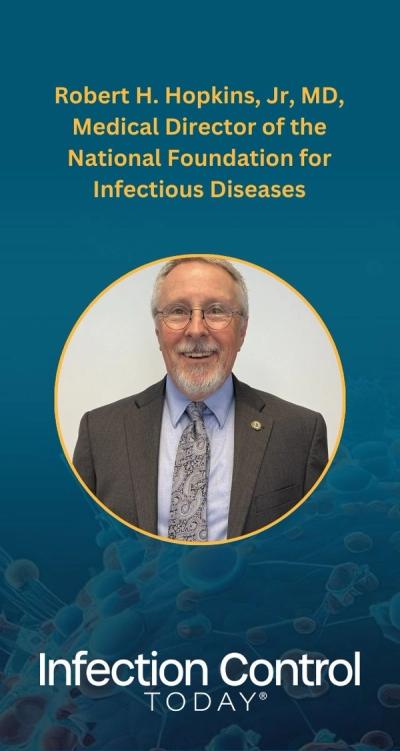
“Why Put More Children at Risk?” Robert H. Hopkins Jr, MD on CDC Vaccine Policy
8 months ago
0:45
Why the Flu Vaccine Still Matters During an H3N2 Season, According to Robert H. Hopkins Jr, MD
8 months ago
CME Content


Advertisement
More News
HSPA 2026 in Baltimore opened with record preconference attendance, expanded educational sessions, charitable community outreach, and global networking, highlighting the growing influence and momentum of sterile processing professionals across healthcare.
Scan fatigue is affecting sterile processing workflows, resulting in gaps in documentation and adherence. At HSPA 2026, Deannard Esnard, CRCST, CIS, CER, CHL, CFER, CQUIA, discusses the need to streamline tracking systems, improve staff engagement, and strengthen patient safety.

Dental assistants manage sterilization, infection control, and patient education—yet most states require zero formal training. They earn the lowest wages in dental offices. Meet Sherrie Busby's 42-year mission to secure standardized credentialing and fair recognition. (Audio podcast)
Dental assistants help bridge communication gaps between dentists and patients. Experts say patient education, follow-up conversations, and modern diagnostic tools are essential for helping individuals understand treatment recommendations and make informed oral health decisions.
Dental Assistants Recognition Week spotlights the critical role dental assistants play in infection prevention, patient safety, and instrument sterilization. From PPE adherence to surface disinfection and patient education, these professionals manage complex clinical and administrative tasks that protect both patients and dental teams in high-risk aerosol-generating environments. (Entire interview)

When operating room delays and tray errors threatened efficiency, leaders at New York Presbyterian built a collaborative bridge with central sterile processing. Through shared metrics, workflow exchanges, and improved communication, first-case-on-time starts climbed from the 50 to nearly 90%.

Infection preventionists are experts at stopping pathogens, but many of the field’s hardest challenges are human. Contagious Conversations is a new video series that opens the candid, sometimes uncomfortable discussions about who belongs in infection prevention, how teams hire and grow, and what it will take to build a stronger workforce. Expect curiosity, honesty, and practical takeaways, not hot takes.
Infection preventionists are experts at stopping pathogens, but many of the field’s hardest challenges are human. Contagious Conversations is a new video series that opens the candid, sometimes uncomfortable discussions about who belongs in infection prevention, how teams hire and grow, and what it will take to build a stronger workforce. Expect curiosity, honesty, and practical takeaways, not hot takes.

Jill Morgan, BSN, RN, of Emory University Hospital, explains why PPE education must start earlier, go deeper, and focus on supply, process, and competency to truly protect health care workers.

Look back with ICT at their print issues and look ahead at what ICT's 30th year will hold!

Copper-infused textiles are gaining traction as hospitals confront rising antimicrobial resistance and financial pressure. In this installment of ICT linen roundtable, experts explained how passive antimicrobial fabrics can reduce infection risk, shorten length of stay, protect revenue, and strengthen operational resilience, all while working quietly in the background.
As hospitals seek stronger defenses against health care-associated infections, experts are turning their attention to an unexpected source: copper-infused linens. Learn how, supported by emerging science and real-world feasibility, these textiles may offer a practical and effective way to lower microbial loads and enhance infection prevention bundles in this installment of a recent roundtable on linen issues.
As hospitals search for new ways to reduce environmental bioburden, copper-embedded textiles are emerging as a promising tool. In this second installment of ICT's recent panel discussion, experts described how these soft, everyday fabrics can rapidly kill microbes, sustain their effectiveness between washes, and strengthen infection control bundles across care settings.

Missed opportunities, Graves warned, place patients at risk. Many surgical patients are immunocompromised, and a stethoscope may come near the incision. “Regardless of the scenario, [cleaning the stethoscope] each time is going to protect patients.”
Stethoscope hygiene, UV technology, and dwell time failures took center stage in this second installment of a panel of experts explored why routine disinfection still lags and what must change in clinical practice.

At IDWeek, Mohammad Enayet Hossain, PhD, from ICDDR,B, shared a breakthrough: a portable point-of-care test that works in half an hour and has strong accuracy against RT-PCR. A huge step forward for outbreak readiness.
In this provocative interview, Kevin Outterson, JD, LLM, explains why infection prevention benefits society but costs hospitals, urging fire department–style funding and PASTEUR incentives that reward diagnostics, stewardship, and antibiotic use.
Breaking the Silence: How to Talk About HIV and PrEP Without Fear
Published: | Updated:
Conversations about HIV and sexual health can still feel uncomfortable, but they don’t have to. In a candid interview, Hope & Help medical director Cariane Morales Matos, MD, explains why open, stigma-free discussions about HIV prevention and PrEP are essential for protecting teens, families, and communities.
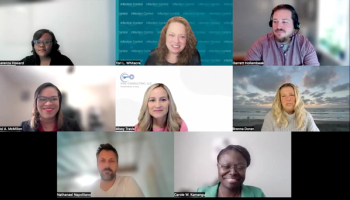
In a postpandemic health system, infection preventionists are hired for certifications but kept for soft skills. In this second installment of ICT's roundtable, veteran IPs chart the shift from task-doer to systems leader, calling for smarter staffing, structured onboarding, and relationship-first programs to beat burnout and turnover.
When a nationwide blood-culture bottle shortage squeezed hospitals, a Stanford-led team turned to machine learning by building and openly sharing tools that predict which patients are most likely to have bacteremia and when a culture can be safely deferred. The simplest version works as a quick bedside score, no new software required.
At IDWeek in Atlanta, former CDC director Tom Frieden unveiled a crisp playbook for infection prevention—“See. Believe. Create.”—arguing it can help hospitals spot outbreaks sooner, reverse drug resistance, and drive HAIs toward zero. He paired the message with a 7-1-7 target: 7 days to find an outbreak, 1 to report, 7 to control.
COVID-19 is back on the wastewater radar, but this fall’s bump does not look like a menacing new variant, says UMN infectious-diseases physician Matthew Pullen, MD. As CDC shifts to “shared decision-making” for vaccination—a move critics warn could slow access—his guidance stays simple: stay home when sick, and get the shot you can get now.
Advertisement
Advertisement
Trending on Infection Control Today
1
What Is Trichophyton indotineae? Drug-Resistant Ringworm Spreads to 29 Countries
2
Long-Acting HIV Treatment and PrEP: How Weekly Oral and Injectable Therapies Could Change Adherence and Patient Choice
3
ICT Weekly Rounds – September 17, 2026: RIngworm, Measles, Ebola Updates
4
Sterile Processing Burnout and Cognitive Overload: How Interruptions, IFUs, and Human Factors Affect Patient Safety
5