|Articles|May 25, 2014

Meritech Aims to Help End Hunger by Encouraging People to Wash Their Hands

Meritech, manufacturer of a fully-automated, touch-free handwashing system that performs a 12-second handwash, sanitize and rinse cycle, wants to play a part in the effort to save lives by ending hunger and donating $1 to the Global FoodBanking Network (GFN) for every set of hands washed in one of its four automated handwashing systems set up at the company's booth at the United Fresh 2014 Trade Show.

Come to booth #2156 at the show, being held June 10-13, 2014 at McCormick Place in Chicago, and wash your hands in a quick 12-second cycle and Meritech will donate $1 for your wash and $1 for every other wash in the company's machines at the show. The company's goal at United Fresh is 3,000 washes.

From now through the end of June, an anonymous philanthropist has generously offered to match any donation to GFN at a ratio of 2:1; this means that a $1 donation is actually a $3 gift to GFN to help the hungry globally.

Source: Meritech


Related to this article

A group of students raising their hands in class during a lecture  (Adobe Stock 292282454 by Mediteraneo
How do you celebrate an infection that never happened? That's one of the unusual challenges infection preventionists share with teachers. Both can spend their careers changing outcomes they may never see. Both educate people who don't always want to listen. Both are second-guessed. Both face burnout. And both must somehow keep remembering why they started.
Bug of the Month
The Bug of the Month helps educate readers about existing and emerging pathogens that are clinically important in today's health care facilities. This month’s Bug of the Month isn’t quite like anything we’ve featured before. Can you solve the clues before the final reveal?
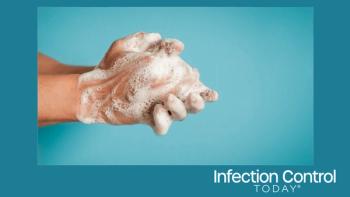
Person washing hands. (Adobe Stock 200575602 By kieferpix)
In this podcast with ICT, Danielle Updegraff, MBA, BSN, RN, discusses real-time location systems, which can give infection prevention teams greater visibility into hand hygiene, workflow, and infectious disease exposures, but sustainable improvement still depends on staff engagement, leadership, education, and culture.