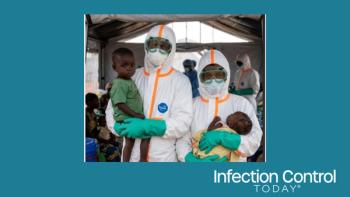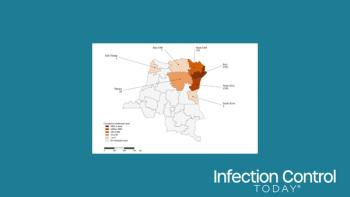
High contact follow-up rates suggest progress, but who is being missed? Inside the DRC’s Ebola response, shortages, strained treatment centers, and gaps in community trust reveal a more complicated story.
Kimberly-Clark Health Care announces that it has been cleared by the Food and Drug Administration (FDA) to market its MicroCool* Breathable High Performance Surgical Gown as meeting the Association for the Advancement of Medical Instrumentation (AAMI) Level 4 Standard for liquid barrier protection. The AAMI Standard is a system of liquid barrier performance classification for protective apparel. The gown, featuring the updated labeling, is expected to be available in select locations beginning this month and to the complete market by the end of this year.
The AAMI Standard addresses four levels of barrier protection ranging from Level 1 to Level 4. Gowns with a Level 4 classification provide the highest liquid barrier protection defined by the AAMI Standard. The classification of the entire surgical gown under the AAMI Standard is based on the lowest level of protection within any of its Critical Zones.
Kimberly-Clark Health Care, utilizing feedback from its customers, developed the new MicroCool* Breathable High Performance Surgical Gown, with the highest AAMI level of liquid barrier protection while still providing the same comfort and critical lint, abrasion, flame and bacteria resistance that its customers need.
The single-use gown helps prevent blood and other bodily fluids from penetrating through to the clinicians skin during any procedure and is specifically designed for the most demanding and fluid-intensive procedures. Incorporating adhesive laminate technology, the gown features an advanced microporous fabric, which utilizes two layers of nonwoven fabric to enclose a protective film layer that "breathes," dispelling body heat to keep the wearer cool and comfortable.
This level of innovation further illustrates Kimberly-Clark Health Cares commitment to designing products that meet customer needs.
"As a pioneer in the development of MicroCool* technology, Kimberly-Clark Health Care has a long heritage of providing the most innovative products to our customers," says John Amat, vice president of global sales and marketing, Kimberly-Clark Health Care. "The gown delivers surgeons and surgical staff a full spectrum of protection and the assurance of barrier integrity, allowing them to concentrate solely on patient care during long and stressful procedures and not on their risk of exposure," said Amat.
Consistent with Kimberly-Clark Health Cares commitment to sustainability and providing a "greener" healthcare community, the MicroCool* Breathable High Performance Surgical Gowns, AAMI Level 4 barrier performance fabric technology is PFOA-free and adheres to the Environmental Protection Agencys (EPA) standard for protecting the environment.
"We create our own fabrics in house. This vertical-integration system allows us to drastically reduce both our impact on the environment and our customers pockets," Amat adds.