|Articles|March 9, 2018

Nasal Decolonization's Broadening Application: Replacing Contact Precautions

An increase in prevalence in healthcare settings across the continuum of care over several decades has resulted in MRSA and other multidrug-resistant organisms (MDROs) being given priority as targets of reduction efforts by several regulatory and advisory bodies. These include the Society for Healthcare Epidemiology of America (SHEA), the Infectious Diseases Society of America (IDSA) and the Centers for Disease Control and Prevention (CDC).

Despite the continued growth of evidence that universal decolonization is more effective than targeted screen and isolate protocols in reducing HAIs, concerns for antibiotic over-use has fostered the reluctance of some to adopt the universal approach. With the availability of a nonantibiotic nasal decolonization alternative, infection preventionists, infectious disease personnel, nursing managers accountable for HAIs on their units, surgeons and other professionals responsible for patient care and safety have reason to re-consider the advantages of universal decolonization. These advantages extend to several areas in which the reduction of MRSA infection and transmission is paramount, most certainly including efforts to reduce the use of CP.

This Whitepaper will discuss:

  • The history of contact precautions for patients with MRSA

  • Assessing the benefits of contact precautions

  • Negative impacts associated with the use of contact precautions

  • The road to reducing the use of contact precautions

Sponsored by


Nozin® Nasal Sanitizer® antiseptic is clinically proven to reduce Staph aureus nasal carriage without iodine or antibiotics. The leader in nasal decolonization, Nozin is at the forefront of providing innovative infection control solutions in hospitals and healthcare facilities. Nozin patented technology for use by patients and healthcare professionals can help reduce pathogen burden in high-risk areas and lower infection control costs. Based in Maryland, Global Life Technologies Corp. manufactures Nozin product. www.nozin.com


FILL IN THE FORM AND DOWNLOAD TODAY!



Related to this article

A group of students raising their hands in class during a lecture  (Adobe Stock 292282454 by Mediteraneo
How do you celebrate an infection that never happened? That's one of the unusual challenges infection preventionists share with teachers. Both can spend their careers changing outcomes they may never see. Both educate people who don't always want to listen. Both are second-guessed. Both face burnout. And both must somehow keep remembering why they started.
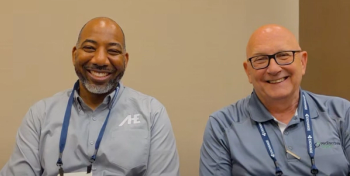
Donald Sipp, Jr, MBA, RESE, CHESP, CHTI-2, CMIP, PMP, and David Green  (Image credit: author)
“Cutting” waste shouldn’t mean cutting people. At AHE Exchange26, David Green and Donald Sipp explored how EVS departments can improve performance by strengthening workplace culture, empowering employees, eliminating inefficient processes, and understanding EVS’s critical role in patient throughput. One case study showed bed turnaround times falling from nearly 2 hours to less than an hour, but the larger lesson wasn't simply about speed. High-performing EVS operations begin with a strong foundation.
Bug of the Month
The Bug of the Month helps educate readers about existing and emerging pathogens that are clinically important in today's health care facilities. This month’s Bug of the Month isn’t quite like anything we’ve featured before. Can you solve the clues before the final reveal?
Person washing hands. (Adobe Stock 200575602 By kieferpix)
In this podcast with ICT, Danielle Updegraff, MBA, BSN, RN, discusses real-time location systems, which can give infection prevention teams greater visibility into hand hygiene, workflow, and infectious disease exposures, but sustainable improvement still depends on staff engagement, leadership, education, and culture.