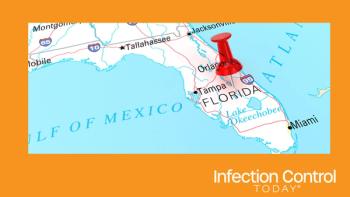
Florida’s dengue outbreak highlights the importance of recognizing symptoms, identifying warning signs, and preventing mosquito bites. Ubong Johnson, MD, explains local transmission, diagnostic testing, treatment, and practical prevention measures.
The H1N1 flu virus is spreading misery around the country, but University of Michigan researchers say that implementing and sustaining infection-limiting measures will still be a challenge.
In focus groups with residents from four Michigan communities, U-M researchers found that people’s mistrust in government and concerns about job security or financial burdens would make social distancing efforts hard to maintain in any pandemic. The study’s results were published this month in the American Journal of Bioethics.
“Leaders in public health need to consider the many challenges articulated by our community members about the closure of businesses, schools and other gathering places during a pandemic,” says co-author Susan D. Goold, MD, director of U-M’s Bioethics Program and professor in the Department of Internal Medicine.
“Not surprisingly, they were concerned about financial consequences, but they also expressed concern about the feasibility of keeping children and teens isolated, and the need for spiritual gatherings during a crisis."
Along with Goold, the study was authored by Nancy M. Baum, a U-M doctoral candidate in the School of Public Health, and Peter D. Jacobson, professor of Health Law and Policy in the Department of Health Management and Policy, University of Michigan School of Public Health, and director of the Center for Law, Ethics, and Health. Jacobson was the principal investigator on the study.
Baum says participants in all focus groups shared economic concerns about prolonged business or school closures, or quarantine.
“Several parents viewed staying home from work to care for children during school or daycare closures as a luxury that not all families could afford,” Baum says. “Others were worried about losing their jobs if they had to stay home because they were sick or their children were home. Economic pressures like that can lead to unsafe situations like children being left home unattended.”
Many survey participants were concerned about mandatory closure of religious gatherings or organizations during a pandemic, Baum says.
“People use religious worship to manage stress during difficult times and for some communities it is an important way to share information,” Baum says.
Participants in all four focus groups discussed lack of trust in how government officials would implement social distancing measures, Baum says. They were skeptical that politicians would do the right thing -- instead they would do what is politically expedient --- and doubted that they would convey accurate information to the public.
What’s needed, Baum says, is an intense effort to engage the public in pandemic planning. Policy makers may want to consider incorporating mechanisms for financial support into response plans to alleviate economic worries.
“The kinds of things we’re considering asking people to do are very difficult,” Jacobson says. “If the public is not engaged, or feels they are not being treated fairly, the less likely they are to comply.”
The research was funded by the University of Michigan Office of the Vice President for Research and the University of Michigan Center for Law, Ethics and Health.