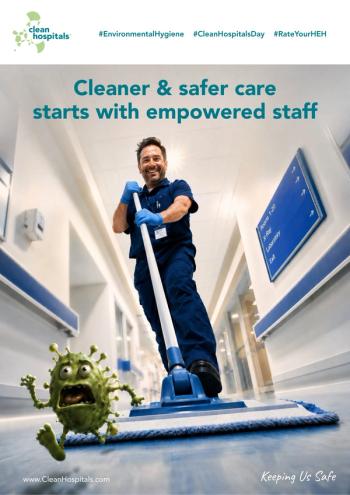
When we clean a surface, we physically remove unwanted substances, whereas sanitizers and disinfectants kill germs.
Still, attempting to disinfect a surface with a high bioload—the total organic matter and microorganisms present prior to treatment—is like trying to paint over a muddy wall. High bioload shields pathogens, neutralizes disinfectants, and drives biofilm formation.
Completed in June 2026, Phase 1 of the Bioload Exposure Metric Index (BEMI) addresses this challenge by standardizing sampling using ATP (adenosine triphosphate) readings as a proxy for contamination in a single-score metric.
How BEMI Reframes Hygienic Monitoring
BEMI is a proxy for organic, microbial, particulate, and chemical soils—similar to how CO2 proxies indoor air pollutants—in 3 primary contaminant classes (Table):
- Soil contaminants: Consist of organic matter (lipids, proteins, carbohydrates) and inorganic particulates (dirt, dust, soot).
- Microbial contaminants: Includes bacteria, enveloped and non-enveloped viruses, fungi, and biofilms that require friction and surfactants for physical detachment.
- Chemical contaminants: Involves agrochemicals, industrial/automotive residues, heavy metals, and detergent residues that attract new soil.
- Phase One Sampling Protocol: To ensure data consistency across operators and facilities, BEMI Phase One standardizes ATP swabbing methods for surfaces, hands, and equipment, based on the premise that you can’t disinfect a dirty surface with dirty hands or dirty tools.
- Surface swabbing: Technicians swab a standardized 10 cm x 10 cm (4-inch square) area, rotate sampling weekly across target locations to ensure thorough coverage, and document the location, time, surface, process used, and workers involved.
- Hand swabbing: This targets hand areas prone to cross-contamination: the palms, fingertips, backs of the hands, and spaces between the fingers.
- Tool or equipment swabbing: Includes mop and equipment handles, levers, or controls.
- Credentialing framework: BEMI Certification complements air sampling and serves as part of the INDEX Certified Indoor Environmental Quality Specialist (CIEQS) credential.
What is Clean? By Malcolm Smith
By strict definition, “clean” is the absence of unwanted matter. That said, the scope of work ultimately defines it. As quality expert W. Edwards Deming illustrated, cleaning a table in a restaurant differs from cleaning an operating room (OR) table; so “clean” is defined by the system's aim.
Since we are promoting the Bioload Exposure Metric Index (BEMI) as a proxy for overall surface contamination (not including specific pathogens), the “cleaning” aim is to reduce adenosine triphosphate (ATP) levels.
Of course, while ATP devices commonly measure a single energy molecule (ATP), newer technology measures 3 molecules: ATP, ADP (adenosine diphosphate), and AMP (adenosine monophosphate), providing a broader, more precise assessment of organic contamination.
This is helpful because ATP breaks down quickly over time or when exposed to certain environments, transforming into ADP and AMP.

Looking ahead: Phase 2 and the LOVE Index
Phase 2 will build upon these sampling methods by establishing a 1-10 cleanliness scale based on field testing. This phase introduces the BEMI Localized Verified Exposure (LOVE) index, which correlates BEMI scores with ATP sampling (organic load), heterotrophic plate counts, and exposure risk to validate cleaning protocols and reduce hospital-acquired infections (HAIs). BEMI is part of the Localized Applied Science Environmental Routines (LASER) program of the 501(c)(3) Indoor Exposure Index (INDEX).