|Videos|December 23, 2022

Infection Control Today

  • Infection Control Today, March 2023, (Vol. 27, No. 2)
  • Volume 27
  • Issue 2

Sepsis: One Father's Story of Loneliness and Strength

In this first installment of 3, Infection Control Today® presents a personal story of how sepsis can enter central lines, and how it affects the entire family.

In this first installment of 3, Infection Control Today® (ICT®) presents a personal story of how sepsis can enter central lines. This is one father’s story about how his son lived through sepsis, but it took a huge toll not only on his son but on his whole family.

A port is a lifeline for patients who need them, but it can be an open door for pathogens if strict hygiene protocols are not followed. In this case, it changed an entire family’s way of life.

David Jordon, BS, key account manager for US hospitals for Covalon Technologies talks to ICT® about his family’s story of how sepsis changed their lives. He describes his family’s story of pain, loneliness, and, above all, strength to get through a terrible time in their lives due to their son’s illness. This story is also a tale of dedication, determination, and love.

In this exclusive interview, Jordan talks about his background and where his knowledge of infections and sepsis comes from. Then he discusses his son’s story and how his infection journey led to sepsis.

“That experience [of spending a month in the hospital with sepsis] really changed his outlook on things,” Jordan tells ICT®. “It was a very tough time for him. Going through what he went through, it was a very tough time for my wife, very tough time for me. You know, it was tough on the entire family. And because we have two other children that either Mom or Dad [is] not going to be home because they're at the hospital with him. So it's been a journey.”

The next 2 installments of this interview will post on Fridays for the next 2 weeks.

The second installment is here.


Related to this article

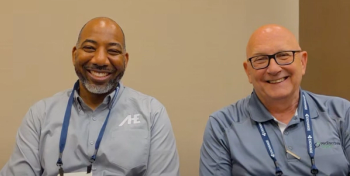
Donald Sipp, Jr, MBA, RESE, CHESP, CHTI-2, CMIP, PMP, and David Green  (Image credit: author)
“Cutting” waste shouldn’t mean cutting people. At AHE Exchange26, David Green and Donald Sipp explored how EVS departments can improve performance by strengthening workplace culture, empowering employees, eliminating inefficient processes, and understanding EVS’s critical role in patient throughput. One case study showed bed turnaround times falling from nearly 2 hours to less than an hour, but the larger lesson wasn't simply about speed. High-performing EVS operations begin with a strong foundation.
A group of students raising their hands in class during a lecture  (Adobe Stock 292282454 by Mediteraneo
How do you celebrate an infection that never happened? That's one of the unusual challenges infection preventionists share with teachers. Both can spend their careers changing outcomes they may never see. Both educate people who don't always want to listen. Both are second-guessed. Both face burnout. And both must somehow keep remembering why they started.
Infection preventionists in full PPE with children in DRC.  (Image credit: author with AI)
Nearly 4 months into the DRC's Bundibugyo virus disease outbreak, some indicators suggest transmission may be slowing. But shifting hotspots, treatment-center capacity problems, community deaths, and incomplete surveillance data show why national case totals alone cannot determine whether containment has been achieved.