***Update: This is a response from Penn State Health to this story:
Today’s Spotlight PA story about the Milton S. Hershey Medical Center provides an inaccurate and wildly sensational description of our processes and procedures, conflating different issues and unnecessarily raising concerns among patients needing surgical procedures.
We only perform procedures with instruments that meet our stringent standards, and any trays that don’t meet those standards get sent for reprocessing.
The existence of plastic particulate specks on some surgical instruments and in some instrument trays after sterilization is a common challenge in hospitals across the country and around the world. To date, this issue has affected a minute fraction of the instrument trays we sterilize. We have completed 99.8 percent of surgical procedures on schedule, always using the proper instruments, and maintained the highest standards for patient safety throughout.
What patients and their physicians need to know is that our quality control systems are working exactly as designed to protect patient safety.
Our closely monitored patient safety metrics and indicators have remained stable. Those metrics put us among the best healthcare institutions in the country. Our regulators at the state and federal levels have approved our efforts to manage the occasional identification of particulate specks.
These results are entirely attributable to our dedicated teams who work tirelessly for their patients. As we continue to take comprehensive steps toward a solution, patient safety remains the only consideration involved in every decision we make.
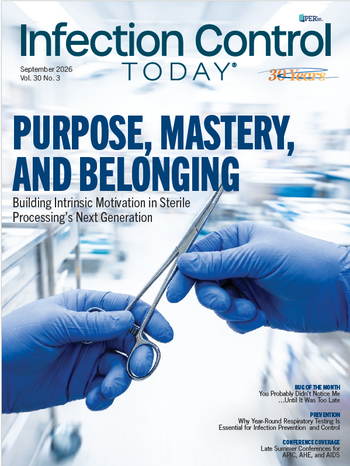
Original ICT article: Sterile processing departments (SPDs) are often called the invisible backbone of surgical care. Patients may never see these teams, but every surgical instrument used in an operating room depends on their ability to properly clean, inspect, assemble, sterilize, and distribute medical devices safely and consistently.
A recent investigation announced by Spotlight PA involving Penn State Health and its flagship Milton S. Hershey Medical Center has brought national attention to what can happen when sterile processing systems become strained. The investigation identified reports of contaminated instrument trays, sterilization backlogs, equipment concerns, staffing pressures, and communication breakdowns that alarmed employees and raised broader questions about patient safety, infection prevention infrastructure, and health care system priorities.
While the situation at Hershey Medical Center is still evolving, infection prevention and control (IPC) professionals say the issues highlighted in the report reflect challenges occurring in health care facilities nationwide.
Why Sterile Processing Matters
Every year, millions of surgical procedures are performed safely because sterile processing teams follow rigorous evidence-based practices designed to prevent contamination and infection.
When those systems fail, the consequences can be serious.
“Everything we do touches a patient,” Damien Berg, vice president of strategic initiatives at the Healthcare Sterile Processing Association (HSPA), told Spotlight PA. Sterile processing professionals often say they are the “heartbeat” of the hospital because no surgeries can be done without their work.
Unsterile instruments are among the most significant contributors to surgical site infections (SSIs), which remain one of the most common health care-associated infections (HAIs). According to the CDC, SSIs account for approximately 20% of HAIs among hospitalized patients.1 These infections can lead to prolonged hospitalization, repeat surgeries, sepsis, disability, and death.
The Penn State Health investigation described several troubling incidents, including black particulate matter repeatedly appearing on surgical instruments, delays in instrument reprocessing, and staff reportedly piecing together surgical sets because sterile instruments were unavailable. In one case, an emergency brain surgery reportedly proceeded using “contaminated” instruments because no alternative set could be located.
Perhaps most concerning, an internal review reportedly found that a heart surgery in January 2025 was performed using instruments later recognized as unsterile after a sterilization indicator strip was discovered to be red rather than the expected yellow.