

What do schools need to prevent the spread of infectious diseases? Infection prevention experts and school staff in Nebraska present their collaboration at IDWeek2025.
What do schools need to prevent the spread of infectious diseases? Infection prevention experts and school staff in Nebraska present their collaboration at IDWeek2025.
California’s first locally acquired dengue case in 2023 triggered a rapid serosurveillance effort across Southern California—and IDWeek 2025 results suggest infections are underrecognized, with DENV-3 detected and widespread flavivirus cross-reactivity from West Nile virus complicating diagnosis.
Could Dollar General be Alabama’s next vaccination hub? At IDWeek 2025, John R. Bassler, MS, and colleagues showed that strategically pairing mobile clinics with DG stores could help close stubborn geographic vaccine gaps, especially in counties with higher social deprivation where traditional providers are scarce.
Hospital-wide sequencing of 8,567 Staphylococcus aureus isolates at NYU Langone revealed that many MRSA cases stem from tight community transmission networks—not in-hospital spread. Presented at IDWeek 2025, the work pinpoints distinct clusters (young MSM/substance-use networks, long-term care residents, and children) and urges IPC strategies that bridge hospital and community.
A multifaceted infection-prevention push at a tertiary rehab ICU in the Upper Midwest reversed a rise in C difficile, lifting hand-hygiene adherence from 69% to 91% and cutting the C. diff standardized infection ratio from 1.6 to 0.4 over six months, researchers reported at IDWeek 2025 in Atlanta.
New IDWeek 2025 data show who C difficile kills most: White patients, women, and people in major metros—with most deaths tied to health care exposure—underscoring how basics and smarter antibiotics remain our best levers to cut mortality.

Clear communication is not just important in a pandemic—it’s everything. In a preview of his upcoming Health Watch USA presentation, William Schaffner, MD, shares lessons from COVID-19 on building trust, keeping messages simple, and acknowledging uncertainty.
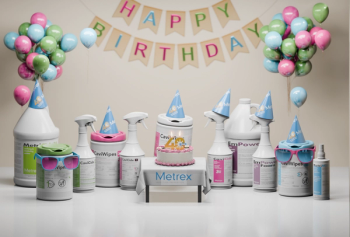
At APIC 2025, Metrex Research marked a major milestone—4 decades of partnering with infection preventionists. Infection Control Today caught up with Senior Marketing Manager Cheryl Collins, MPH, and clinical advisor Sharon Ward-Fore, MS, MT(ASCP), CIC, FAPIC, to talk legacy, innovation, and why supporting IPs will always be at the heart of what Metrex does best.

Sterile processing departments are facing a new standard: clean is not clean unless you can see it. At HSPA 2025, experts emphasized that updated IFUs and borescope inspections must be built into routine workflows, not as extra tasks, but as core components of quality control and infection prevention.
Despite their smooth, polished exteriors, surgical instruments often harbor dangerous contaminants deep inside their lumens. At the HSPA25 and APIC25 conferences, Cori L. Ofstead, MSPH, and her colleagues revealed why borescopes are an indispensable tool for sterile processing teams, offering the only reliable way to verify internal cleanliness and improve sterile processing effectiveness to prevent patient harm.
APIC’s updated guide shifts the focus from CLABSIs to all catheter-associated bloodstream infections, offering infection preventionists a comprehensive approach to reducing bacteremia and enhancing patient safety.
The pandemic opened unexpected doors for infection preventionists, pushing their expertise beyond hospital walls into schools and communities where stopping infections at the source matters more than ever.
As seasonal viruses surge and recent outbreaks like measles highlight vulnerabilities, infection prevention experts are extending their reach into schools, recognizing that healthy classrooms are essential to healthy communities.

Environmental hygiene is about more than just shiny surfaces. At Exchange25, infection prevention experts urged the field to look deeper, rethink blame, and validate cleaning efforts across the entire care environment, not just EVS tasks.

Hospitals may rely on handwashing as a frontline defense against infection, but the very sinks meant to promote hygiene can harbor dangerous pathogens. At this year’s AHE Exchange Summit, microbiologist Mark Wiencek, PhD, T-CHEST, explores how biofilms in sink drains create a persistent threat to patient safety—and what infection prevention and EVS teams can do about it.
Dr Rebecca Crapanzano-Sigafoos explains how at this year’s APIC Annual Conference & Expo in Phoenix, leaders unveiled key initiatives poised to shape the future of infection prevention, including a new research network, an updated MegaSurvey, and a comprehensive guide to catheter-associated bloodstream infection prevention.

Infection preventionists are at the forefront of the infodemic; the keynote session offered suggestions on how they can combat and mitigate misinformation.
A hospital’s surveillance validation process uncovered a hidden threat to antimicrobial stewardship: contaminated urine cultures leading to unnecessary antibiotic prescriptions. This prompted a collaborative effort to improve specimen integrity and reduce inappropriate antimicrobial use through targeted diagnostic stewardship.
From a lifelong mentor to a rising star, the Association for Professionals in Infection Control and Epidemiology (APIC) honored leaders across the career spectrum at its 2025 Annual Conference in Phoenix, recognizing individuals who enhance patient safety through research, leadership, and daily practice.

Despite rapid development, the Middle East faces a critical shortage of certified infection preventionists. A 7-year regional initiative has significantly boosted infection control capacity, increasing the number of certified professionals and elevating patient safety standards across health care settings.
A hospital-wide quality improvement project has transformed how staff access critical manufacturer instructions for use (IFUs), improving infection prevention compliance and saving time through a standardized, user-friendly digital system supported by unit-based training and interdepartmental collaboration.
When Chicago logged its first measles cases linked to crowded migrant shelters last spring, one pediatric hospital moved in hours—not days—to prevent the virus from crossing its threshold. Their playbook offers a ready template for the next communicable-disease crisis.
A 758-bed quaternary medical center slashed catheter-associated urinary tract infections (CAUTIs) by 45% over 2 years, proving that disciplined adherence to fundamental prevention steps, not expensive add-ons, can reverse the pandemic-era spike in device-related harm.
Spanish-speaking patients face significantly higher risks of contracting serious infections during hospital stays, even when interpreter services are provided, according to new research presented at the 2025 APIC Annual Conference.
At APIC25, infection prevention leader Heather Stoltzfus, MPH, RN, CIC, will spotlight the growing risks and overlooked responsibilities associated with medical tourism. Her session urges infection preventionists to engage with a global health trend that directly impacts US care settings.

Infection prevention is everyone’s responsibility, but environmental services (EVS) professionals are often overlooked. At AHE’s Exchange25, Shannon Simmons, DHSc, is on a mission to change that.

The Association for the Health Care Environment (AHE) is set to host its largest event of the year—Exchange Summit 2025—from June 8 to 11 in Columbus, Ohio. With over 600 environmental services (EVS) professionals expected to attend, this year’s conference focuses heavily on infection prevention, interdepartmental collaboration, and education that empowers frontline health care support leaders to improve patient safety and operational efficiency.

In this interview, completed shortly before the HSPA 2025 conference, as she prepared to take the helm as HSPA’s next president, Arlene Bush, CRCST, CER, CIS, SME, DSMD, CRMST, discusses humility, determination, and a bold vision to elevate sterile processing professionals and broaden the association’s impact.

At the 2025 Healthcare Sterile Processing Association (HSPA) Annual Conference & Expo, Cheron Rojo, BS, FCS, CHL, CIS, CER, CFER, CRCST, spotlighted real-world gaps in sterile processing education, stressing the urgent need for better tools, training, and collaboration when handling intricate medical devices like shaver handpieces.

At the 2025 HSPA conference, experts emphasized the vital role of detergents and enzymatic cleaners in reprocessing medical devices—highlighting how temperature, concentration, and technique directly impact cleaning performance in today’s increasingly complex surgical instrumentation.