
News
Advertisement
Advertisement
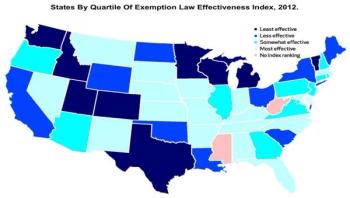
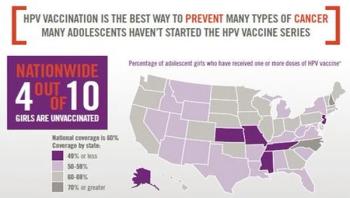
Lax state vaccination laws contribute to lower immunization rates and increased outbreaks of preventable diseases--like whooping cough and measles--according to a new study from the University of Georgia.
Advertisement


The neonatal intensive care unit (NICU) at MedStar Washington Hospital Center reached a remarkable safety milestone on July 31 -- three years with zero central line-associated bloodstream infections (CLABSIs) in its tiniest and most vulnerable babies. While three years CLABSI-free is extraordinary for any intensive care unit, what makes this accomplishment so remarkable is that these babies “are so small and fragile it makes it easier for infection to spread,” says Zacharia Cherian, MD, chairman of neonatology at MedStar Washington Hospital Center. “In addition, their immune systems are still immature, so fighting off infection is much more difficult than for a healthy baby.”

Diagnosis of deadly brain conditions could be helped by new research that shows how infectious proteins that cause the disease spread. The study reveals how the proteins -- called prions -- spread from the gut to the brain after a person or animal has eaten contaminated meat. Scientists say their findings could aid the earlier diagnosis of prion diseases -- which include variant Creutzfeldt-Jakob disease (vCJD) in people and bovine spongiform encephalopathy (BSE) in cows.
Advertisement

The need for infection prevention, as a multidisciplinary function, is a longstanding and widely acknowledged component of safe healthcare. Accreditation and regulatory standards specify that this function must be an organized program coordinated by an individual qualified to assure that the necessary assessments, priorities, key metrics are achieved. This individual must also assure that the program supports the provider’s mission, aligns with its safety culture, and is effectively and efficiently integrated into its operational and care delivery systems. Decades of pub-lished literature, conferences and online educational programs are available to support these requirements.

In the Oxford Dictionary “boundary” is defined as “a line that marks the limits of an area; a dividing line; a limit of a sphere of activity.” “Spanning” is defined as “extend across.” I’m sure we would all agree that organizational boundaries are common in healthcare, and transcending these boundaries presents endless opportunities to build powerful alliances to advance APIC’s mission to create a safer world through prevention of infection.

Q: Recently, we ran out of the single-use filters for our rigid containers. I learned the staff was making their own filters out of packaging material (see photo below). What advice can you provide when something like this happens?
May 2015 marked my 18th month of working as a sterile processing technician. A lot has happened during the past year and a half, so this is a good time to reflect on what I have learned about this important but behind-the-scenes profession in the healthcare industry.


When the highly influential European Medicines Agency announced its recommendation to approve what could be the world’s first licensed vaccine against malaria in infants and children, there was much celebrating in the research community at NYU Langone Medical Center. For it was, in many respects, the culmination of the life’s work of Ruth Nussenzweig and Victor Nussenzweig, the husband and wife team whose research over the past half-century against malaria has brought them international acclaim – and which contributed greatly to this latest breakthrough.

A device to mix liquids utilizing ultrasonics is the first and most difficult component in a miniaturized system for low-cost analysis of sputum from patients with pulmonary diseases such as tuberculosis and asthma. The device, developed by engineers at Penn State in collaboration with researchers at the National Heart, Lung, and Blood Institute (NHLBI), part of the National Institutes of Health, and the Washington University School of Medicine, will benefit patients in the U.S., where 12 percent of the population, or around 19 million people, have asthma, and in undeveloped regions where TB is still a widespread and often deadly contagion.
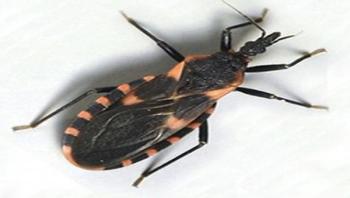
To keep both animals and humans protected from Chagas disease, Texas A&M University System entities have been studying the parasite-host-vector interaction at sites in south-central Texas.
Advertisement
Advertisement
Trending on Infection Control Today
1
Hantavirus Concerns and Cruise Ship Hygiene: What Infection Preventionists Need to Know
2
Education, Advocacy, and Recognition: Malinda Elammari on the Future of Sterile Processing
3
IP LifeLine: Connecting With Specialized Recruiters and Navigating the Hiring Process
4