

Investigators claim that their device can decontaminate N95s and surgical masks in the time it would take an infection preventionist to wash her hands.
Investigators claim that their device can decontaminate N95s and surgical masks in the time it would take an infection preventionist to wash her hands.
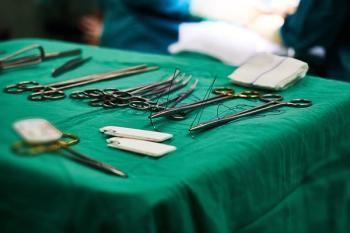
Linda K. Groah, MSN, RN, CNOR, NEA-BC, FAAN: “Historically, we have not always had the best relationship. There’s been some competition between infection preventionists and OR managers or directors. The operating room has been that secret area behind the double doors.”
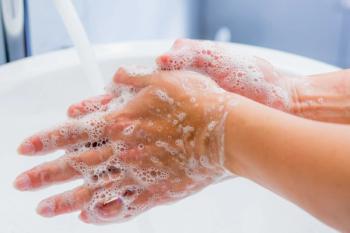
Danish investigators wanted to see if a nudge provided by a green smiley face light on dispensers of alcohol-based disinfectant would improve hand hygiene compliance of nurses and doctors. It did. Greatly.
Michael Millenson: “When you dig a little deeper, you end up though with some questions. We’re a big country, and this is an enormous crisis. Well, $180 million? You can barely buy a couple of US senators with that.”

If you are an infection preventionist and are not currently involved in product review, now may be a great time to reach out to your supply chain team to explain the perspective you can bring to the table and ask to be involved.

Candida auris is difficult to identify with standard laboratory methods. It can be misidentified in labs without specific technology, which can lead to mismanagement.
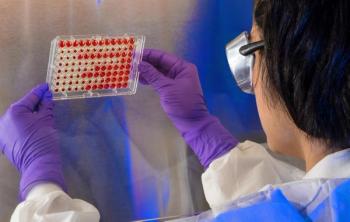
Bamlanivimab, a monoclonal antibody, can be used for anyone 65 or older. It can also be used for patients 12 and over who have an underlying health condition and have been diagnosed with mild-to-moderate COVID-19.

Fibi Attia, MD, MPH, CIC: “There is a daily meeting where we talk about the possibility of getting those COVID vaccines and where are we going to store them. How are we going to distribute them? How many doses do we need? Those kinds of things are being discussed on a daily basis.”

Investigators with Penn State Health note that since the institution’s first call with a COVID-19 patient on March 27, Penn State Health has completed 87% of contact tracing calls with patients who’d been infected by the coronavirus.
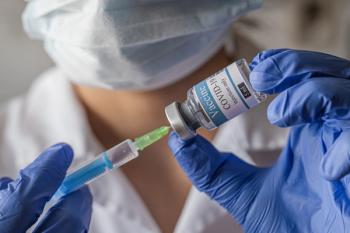
Susan R. Bailey, MD: “Vaccine hesitancy was a huge problem before the pandemic began and has certainly not gotten better since we’ve had COVID and now are looking forward to a COVID-19 vaccine.”

The company is still awaiting its threshold for total COVID-19 infections in its 44,000-patient assessment. Nonetheless, they believe they have made history.
The worst-case scenario is that if an effective and safe COVID-19 vaccine is found, a large segment of our population will elect to use hydroxychloroquine or another ineffective treatment instead, allowing the virus to continue to thrive, and devastate our nation.

Healthcare workers are vigilant about personal protective equipment (PPE), hand hygiene, and disinfection efforts in the hospital when managing COVID-19 patients. Too often, though, they let their guard down when they get home.

The odds of a viral outbreak such as SARS-CoV-2 in custodial settings, such as prisons and juvenile detention centers, are high. But video surveillance already in place in the facilities can enhance contact tracing.

Linda Spaulding: “Infection preventionists, put your tennis shoes on because over the next two months, we’re predicting to see a huge increase.... We have all the holidays coming up. You’re going to have cases from those. Hospitals have to be prepared.”
The MJH Life Sciences COVID-19 Coalition experts share their insights on the state of the pandemic.
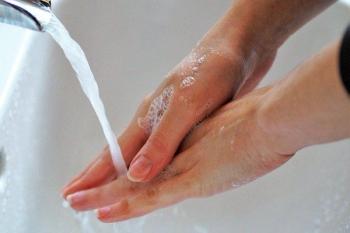
The investigators say that their findings underscore the importance of encouraging and “empowering” patients to be a part of efforts to improve hand hygiene compliance among healthcare workers.
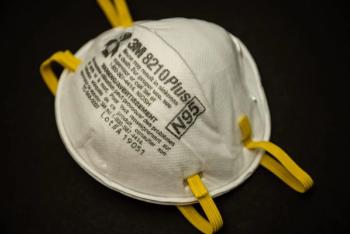
Ashish Diwanji: “The personal protective equipment made and sold in the US has to abide by the standards set up by NIOSH …. The PPE made and sold from China do adhere to the Chinese standards, but their standards are different than ours.”
“[T]here is a need for early education to enforce correct PPE use to alleviate personal risk concerns. This includes re-education of the donning and doffing of PPE to confirm staff are effectively protecting themselves. Data suggests substantial self-contamination risk occurs when doffing PPE….”
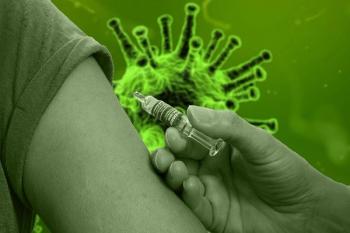
Kevin Kavanagh, MD: “Infection preventionists will need to make sure that they still have access to adequate PPE, even if the vaccine comes out [and they] really need to look at the experimental group that was used for the EUA.”
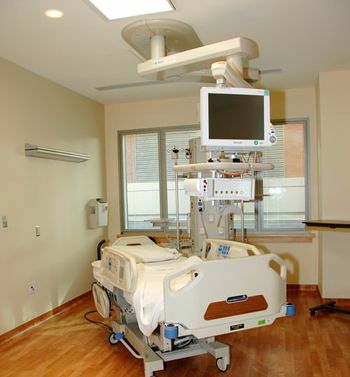
Michael Bell, MD: “The challenge that infection control professionals face has grown tremendously. We’re asking these individuals to not only be experts, but also to take responsibility for such a wide range of activities ... and finding ways to help them accomplish what they’re doing across the whole population of healthcare personnel is the rationale behind Project Firstline.”
CDC’s Jay Butler, MD: “It is critical that every healthcare worker in the United States has the training, information, and resources they need to protect themselves, their patients, colleagues, families, and communities from infections, and Project Firstline is designed to meet that need.”
Discussions about hospitalizations should include those of healthcare personnel who have been hospitalized with COVID-19. This is something that has been a gap in our data but increasingly discussed.
Sharon Ward-Fore, MS, MT(ASCP), CIC: “I’m hoping that healthcare facilities will find the value in their infection preventionists and understand how important a role they play as far as training on PPE and disinfectants, and in hand hygiene, being kind of a boots on the ground people on the floor to see things firsthand.”

Franklin Dexter, MD: “I would recommend to those people working in different surgical suites to recognize that within an operating room, you shouldn’t assume that stepping away from the patient would put you in reduce risk. You should think about what the airflow is in the operating room.”
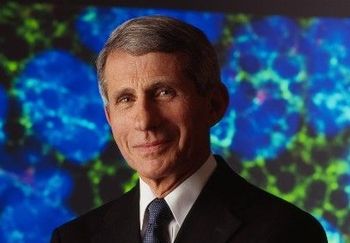
Fauci: “While results of phase 3 trials for multiple candidate vaccines are on the near horizon, ‘low-tech’ tools to prevent the spread of SARS-CoV-2 are essential, and it must be emphasized that these interventions will still be needed after a vaccine is initially available.”

Maya Gossman, RN: “Our infection preventionist has trained me in the past with the PPE use and the infection prevention measures. And so, I’m passing that on—the knowledge that she’s given me—I’m passing that on at this point to my vascular nurse trainees, my orientees.”
Researchers from China recommend disinfecting the air, alongside, sanitizing surfaces, to reduce exposures and transmission.

By their nature, challenge trials have to be performed in young healthy individuals. SARS-CoV-2 is most lethal in the elderly and those with co-morbidities. Thus, an effective vaccine may be found for the young, but not in the elderly with an aging immune system.

Monica Gandhi MD, MPH: “We will get to the end of this [COVID-19]. We will get to a combination of vaccine and natural infection, enough people getting herd immunity that this will stop. This will stop and we will get back to normal.”