
News
Advertisement
Advertisement

This report summarizes and synthesizes studies from the medical literature examining the efficacy and benefits of using germicidal UV-C light technology to enhance manual cleaning and disinfection of healthcare environmental surfaces.

Uninsured patients can be trained to safely and efficiently self-administer long-term intravenous antibiotics, UT Southwestern Medical Center physicians have found, a result that may have profound implications for patient treatment at public hospitals across the country. A four-year study compared outcomes of Parkland Memorial Hospital patients who either self-administered long-term IV antibiotics or had their long-term antibiotics administered by a healthcare worker. The study found similar or better outcomes for the group that administered their own antibiotics, a practice that is rare among hospitals.
Advertisement
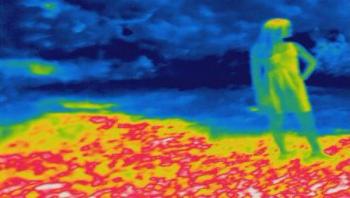
Many animals gravitate toward heat, most often to regulate their own body temperatures. In rare cases, certain species--ticks, bedbugs, and some species of mosquitoes--seek out heat for food. For female mosquitoes, finding heat is essential for survival, as they need to feast on warm-blooded prey to produce eggs. At the same time, mosquitoes have to know when something is too hot, so they won't get scorched on an over-heated blacktop, for instance.
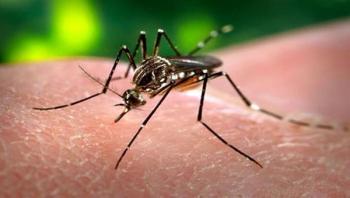
A vaccine to prevent dengue fever discovered by a Saint Louis University researcher in 1997 and now licensed worldwide by Sanofi Pasteur has been approved for use in Mexico. Dengvaxia® is the world’s first vaccine approved to prevent dengue fever, which is a virus spread by mosquitoes primarily in tropical and sub-tropical areas.

The last decade has brought unprecedented changes in healthcare delivery. Although there has been continued development of new devices, drugs and techniques, the major change for those in infection prevention and epidemiology is to identify, manage and use clinical data to provide important information leading to early recognition of disease including prevalence and risk factors for infections, in and across multiple healthcare settings. The potential for more rapid identification and dissemination of important information extends from public health to the individual organization level.

Fecal transplants have been in existence since the fourth century and used to treat ailments such as diarrhea, food poisoning and various other gastrointestinal symptoms. The first fecal transplant performed in the United States was done in 1958 for pseudomembranous colitis and in 1983 for Clostridium difficile (Brandt and Aroniadis, 2013; Eiseman, Bascom, Kauvar, 1958). It is hard to believe that a proven treatment that was performed centuries ago took so long for us to adopt. Simply stated, these proven treatments are known as evidence-based care, which is utilizing the best clinical evidence to guide practice for effective patient care. Although empirical evidence exists that proves efficacy, there are still many barriers in place at institutions that hinder or delay a new process. Some of these barriers include resistance to change, lack of resources, knowledge deficit, and lack of organizational support. In this article I am going to give insight to what barriers I faced while implementing a new process in the hospital where I work as a clinical nurse specialist.
With proof-of-principle in his pocket and a new $2.2 million grant from the National Institutes of Health (NIH), SLU scientist John Tavis, PhD, will take his 25 year mission to finally develop a cure for the hepatitis B virus into the next phase.

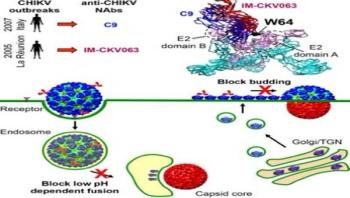
Scientists looking at the antiviral mechanisms of two previously identified human monoclonal antibodies have found they potently inhibit chikungunya virus (CHIKV) at multiple stages of infection. Funded by grants from the National Institutes of Health, scientists at Blood Systems Research Institute (BSRI) in San Francisco and the Washington University School of Medicine in St. Louis have found that neutralizing antibodies that engage epitopes including residue E2-W64 are highly potent at inhibiting the virus in mice, due to the importance of E2-W64 in pathogenicity. Furthermore, these antibodies prevent CHIKV from both entering and exiting cells, whereas prior studies of neutralizing antibodies to CHIKV and multiple other classes of viruses have focused on the capacity to block viruses from entering a cell. The research was published today in Cell Reports, an open-access journal from Cell Press.
Advertisement
Advertisement