

Two doses of COVID-19 vaccines seem to be able to somewhat nullify the effects of the highly transmissible Delta variant, but fewer than 50% of adults in the United States have gotten two doses.
Two doses of COVID-19 vaccines seem to be able to somewhat nullify the effects of the highly transmissible Delta variant, but fewer than 50% of adults in the United States have gotten two doses.

One junior at New Jersey’s Rutgers University, the first to mandate COVID-19 vaccination, said, “I’m not antivax, I’m anti-mandate. My education should not be restricted based on my personal decision to receive the COVID-19 vaccination.”

The most poorly fitting mask can almost double the risk of infection for the wearers and even those around them.

Shortened quarantines for employees located through contact tracing might have made COVID-19 spread “exponentially,” a study suggests.
Take 5 minutes to catch up on Infection Control Today®’s highlights for the week ending June 11.
Underlying conditions make young people more vulnerable to COVID-19, while the U.K. continues reopening despite the rise of the Delta variant.

Houston Methodist Hospital’s action occurs as the spreading of the COVID-19 Delta variant catches the eye of health care officials in the United States.

Investigators with Columbia University School of Nursing found that COVID-19 infections were 13.6 percentage points higher in nursing homes with 50% or more Black residents, and deaths were 3.5 percentage points higher, compared with nursing homes with no Black residents.

At the intersection of surgery and infection prevention resides a sometimes-neglected opportunity to further minimize infection risk by modernizing choices and innovation.

As long as the immune escape variants are on the rise in the U.S. and less than half of our population is fully vaccinated, the best advice is to continue public health strategies.

The CDC’s Lynnette Brammer: “We always had talked about being prepared for an influenza pandemic. And being able to scale up our systems. Well, COVID scaled up our systems way more than we ever dreamed about scaling up for.”

Some fear that hospitals will become “Robots R Us” environments, but that is unlikely. Chatbots, although useful, are poor stand-ins for in-depth, in-person conversation with a health care provider. And if COVID-19 did anything, it put a million faces to the tragedy of what it’s like to die without human contact.

Jody Feigel, RN, MSN: “A few years ago, nobody wanted to hear from infection prevention. Now, everybody wants to hear from infection prevention.”

Many infection preventionists trust that everyone working in the operating room knows what they are doing and many times shy away from going into the OR. That's a mistake.
The new approach to naming COVID-19 variants utilizes the Greek alphabet.
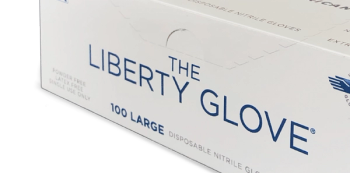
The U.S. Department of Defense signed a contract with a U.S. company that will boost capacity of nitrile glove production in the U.S. by 2.31 billion gloves per year by May 2023.

One of the reasons that S aureus and C diff present such a disinfection challenge is that they are encased in a biofilms such as yeast, protozoa, bacteria, fungi, and algae.

Frontline health care workers have given their lives and livelihood for our safety and need to be remembered during this Memorial Day.

Successful onboarding of candidates requires an orientation that includes all aspects of the position. What are the responsibilities of an IP? Their main function is to identify and mitigate infection risks.

The increasing threat of antimicrobial resistance, exacerbated by the pandemic, underscores the importance of the infection preventionist as an active member of the antimicrobial stewardship program.

Ann Scheck McAlearney, ScD, MS: “Infection preventionists … can provide managers with the guidance provided by this type of research, as well as the data to support infection prevention efforts….”
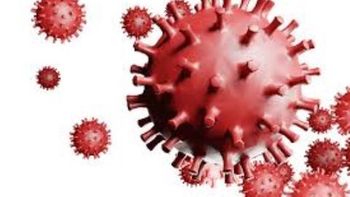
Health and Human Services Secretary Xavier Becerra: “Phase 2 of the COVID origins study must be launched with terms of reference that are transparent, science-based, and give international experts the independence to fully assess the source of the virus and the early days of the outbreak.”

The company reports that for fully vaccinated study participants aged 12-17 (2 doses administered) no cases of COVID-19 were reported.

In terms of severe post-acute complications from COVID-19, there is a low relative risk for those who were not admitted to the hospital.
The new CDC mask guidance came down so quickly that it just didn’t give people time to prepare, and it also ignores that we still have a majority of the population not fully vaccinated.
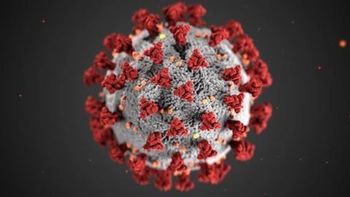
Efforts to pinpoint the pandemic’s cause might have been stymied by the Chinese Communist Party.

Infection preventionists—many of whom are trying to tamp down vaccine hesitancy among some fellow health care professionals—should prepare to help with an autumn campaign.
Last week the number of COVID-19 cases dropped below 40,000 for the first time since mid-September. This past week, they’ve dropped below 30,000, about a 20% improvement in just 1 week.
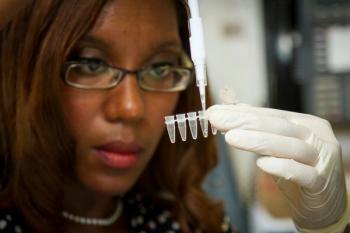
Investigators developed a sensor system that amplifies the binding signal for a target biomarker in order to detect the presence of a virus.

In the study, cotton masks stopped 45%-73% of coronavirus aerosols. Masks with nanofiber filters blocked 99.9% of the particles.