

Compare transmission data for patients on contact precautions using the recommended full complement of PPE versus transmissions for patients on contact precautions when PPE was being utilized differently or not at all.
Compare transmission data for patients on contact precautions using the recommended full complement of PPE versus transmissions for patients on contact precautions when PPE was being utilized differently or not at all.
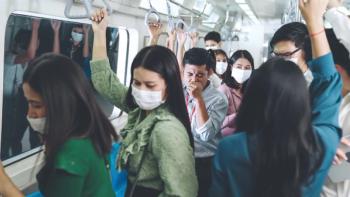
What’s the matter with Kansas? Well, for one thing, counties could choose whether to follow state health department guidelines on masking. COVID-19 case-count differences between counties that did and those that didn’t is striking.
Healthcare experts warn that we still have not felt the full effects of the surge that’s sure to come from the Thanksgiving holiday.
The CDC says that people without symptoms can stop quarantining on day 10 without getting a COVID-19 test. People who are tested and test negative, can stop quarantining on day 7.

Rebecca Leach: “I think the biggest thing is just having support, whoever it is. If it’s a fellow infection preventionist…. It really is that emotional support of being able to talk to each other about your experiences and really process your feelings.”

The United States recorded 3157 COVID-19 deaths yesterday, the highest number in a single day and more than 20% higher than the previous record of 2603 deaths set back on April 15.
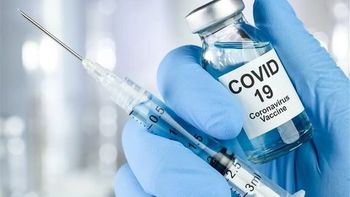
Healthcare providers, according to the CDC advisory panel, includes workers at hospitals, outpatient clinics, long-term care facilities, public health agencies, home healthcare firms, pharmacies, and emergency medical services. About 24 million Americans in all.

When an 850-bed urban hospital fought off COVID-19 in part by having to relax infection prevention protocols, the opportunistic and deadly carbapenem-resistant Acinetobacter baumannii (CRAB) struck.

Kevin Kavanagh, MD: “I would tell the Supreme Court that it’s very important that all high-risk venues are treated equally, but the remedy isn’t opening up one high-risk venue, the remedy should be closing down all high-risk venues.”

Susan E. Campbell, PhD, CIC: “In many cases, perhaps not all cases, but in many cases, infection preventionists can adapt what they know in the hospital setting and make it work in other settings.”
The photograph captures the human anguish caused by COVID-19. The elderly man just wanted to go home and see his wife for Thanksgiving. A doctor tried to comfort him.

Strategies are needed to reduce the risk of COVID transmission between the breastfeeding mother and newborn. Meanwhile, mask mandates work.

The CDC may lower the days someone needs to be quarantined because of COVID exposure from the current 14, to from 7 to 10 days. That range is troublesome: Which is it, 7 or 10?
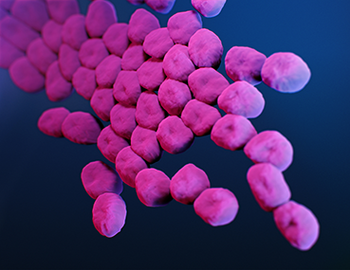
CRAB has chameleon-like tendencies that allow it to absorb material from other organisms, and that allows it to ward off most antibiotics. It’s a Superbug.
The study states that “annual vaccination is necessary to maintain humoral immunity for the elderly population. Furthermore, our findings revealed that annual seasonal vaccination was not associated with reduced vaccine effectiveness….”

Susan E. Campbell, PhD, CIC, offers advice to infection preventionists and other healthcare professionals who’ll be working Thanksgiving on how to safely eat their holiday meal together.
Infection preventionists must brace themselves for a huge influx of COVID patients, as more data reveal just how formidable of a foe this novel coronavirus can be.

The CDC warns that it’s possible that the number of hospitalizations due to COVID-19 are likely to rise every day for the next 4 to 10 weeks, further straining an already strained healthcare system.

Kevin Kavanagh, MD: “I would be more worried about getting the family together for next Thanksgiving than this Thanksgiving. And if you’re going to get your family together this Thanksgiving, you may not have all members together next Thanksgiving, and that’s what needs to be remembered.”

Consult with experts in heating, ventilation, and air conditioning (HVAC) when determining the safety of the school environment, the CDC recommends.
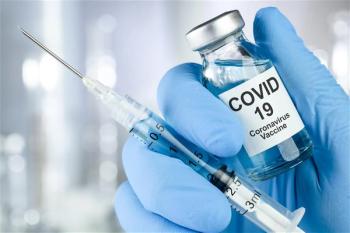
Investigators argue that their findings suggest that a public health campaign touting the benefits of a COVID-19 vaccine had better begin as soon as possible. Like today.

APIC’s warning comes amid a slew of discomforting statistics. Yesterday, the United States recorded more than 187,000 new cases of COVID-19, the highest one-day total since the pandemic began.
The submission comes in the days following announcement from Pfizer and partnering company BioNTech that their phase 3 trial assessing the two-dose mRNA vaccine achieved all its primary efficacy endpoints.
Study: “These results strongly recommend routine daily cleaning of mobile phones for effective reduction of device contamination; moreover, medical staff should perform hand hygiene before and after using mobile phones.”
The test involves collecting a nasal sample and then putting it into a vial. Within 30 minutes or less, a light-up display will show whether the person has tested positive or negative for SARS-CoV-2.

Kevin Kavanagh, MD: “We can’t just bury our heads in the sand and bleed through healthcare staff and bleed through PPE, thinking that this is not going to be something that’s going to cause severe problems in these individuals, or that it’s going to magically disappear next week."
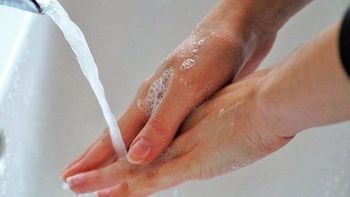
During the period that employees wore a monitoring badge, compliance with hand hygiene protocols increased significantly.

W. Frank Peacock, MD, FACEP, FACC, FESC: “When I intubate somebody, I need to know where the tube is, and I need to know now—like within 10 seconds. You can’t tell with anything else. Nothing is as fast as the stethoscope. I can get an X-ray, but I’ve got to wait for the X-ray while you hold your breath.”

Caitlin Stowe, CIC, MPH, CPHQ, VA-VC: “The cool thing about being an infection preventionists is that I call myself the jack of all trades, but the master of really none. Because you really have to know a little bit about everything.”

IPs have not only that frontline experience, but also the ability to pivot and evolve with recommendations. In fact, our very jobs are about translating continuously evolving evidence and guidance into practice.