
News
Advertisement
Advertisement

An immune system that helps bacteria combat viruses is yielding unlikely results such as the ability to edit genome sequences and potentially correct mutations that cause human disease. University of Georgia researchers Michael and Rebecca Terns were among the first to begin to study the bacterial immune system. They now have identified a key link in how bacteria respond and adapt to foreign invaders.

Advertisement


Drawing inspiration from veterinary medicine, researchers at the University of Washington have helped developed a new prospective approach to diagnosing tuberculosis (TB) - easy-to-obtain oral swab samples, greatly improving on standard diagnostics.



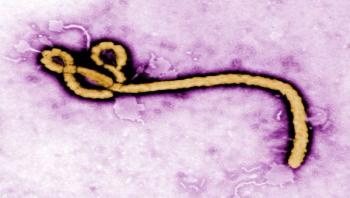
New research that focuses on the mechanism by which Ebola virus infects a cell and the discovery of a promising drug therapy candidate published Feb. 27 in the journal Science. Dr. Robert Davey, scientist and Ewing Halsell Scholar in the Department of Immunology and Virology at Texas Biomedical Research Institute announced today that a small molecule called Tetrandrine derived from an Asian herb has shown to be a potent small molecule inhibiting infection of human white blood cells in vitro or petri dish experiments and prevented Ebola virus disease in mice.
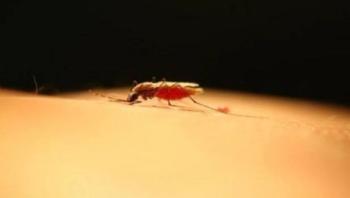
Sexual biology may be the key to uncovering why Anopheles mosquitoes are unique in their ability to transmit malaria to humans, according to researchers at Harvard T. H. Chan School of Public Health and University of Perugia, Italy. Through analysis of 16 Anopheles genomes, they found that these mosquitoes’ reproductive traits evolved along with their capacity to transmit the Plasmodium parasite that causes malaria. These findings may provide a new target for malaria control, particularly in regions hardest hit by the disease.

Up to 1 million people -- mainly pregnant woman and young children -- are killed each year by the Plasmodium falciparum parasite, which causes the most devastating form of human malaria. Now, researchers at the Hebrew University of Jerusalem have revealed the genetic trickery this deadly parasite deploys to escape attack by the human immune system.

The current global influenza situation is characterized by a number of trends that must be closely monitored. These include: an increase in the variety of animal influenza viruses co-circulating and exchanging genetic material, giving rise to novel strains; continuing cases of human H7N9 infections in China; and a recent spurt of human H5N1 cases in Egypt. Changes in the H3N2 seasonal influenza viruses, which have affected the protection conferred by the current vaccine, are also of particular concern.

Advertisement
Advertisement
Trending on Infection Control Today
1
What Is Trichophyton indotineae? Drug-Resistant Ringworm Spreads to 29 Countries
2
Infection Control Today Launches First Digital Magazine for Infection Prevention Professionals
3
ICT Weekly Rounds – September 17, 2026: RIngworm, Measles, Ebola Updates
4
National EVS Week 2026: Why Environmental Services Is Essential to Infection Prevention and Patient Safety
5