
News
Advertisement
Advertisement
Advertisement
Advertisement
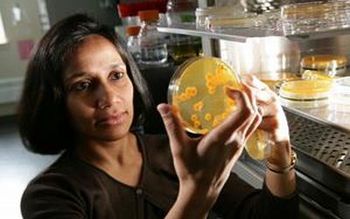
Targeting serious and sometimes deadly fungal infections, a team of researchers at Worcester Polytechnic Institute (WPI) and the University of Massachusetts Medical School (UMMS) has discovered a chemical compound that prevents fungal cells from adhering to surfaces, which, typically, is the first step of the infection process used by the human pathogen Candida albicans (C. albicans).
A team of Lawrence Livermore National Laboratory (LLNL) scientists led by Monica Borucki of LLNL's Biosciences and Biotechnology Division, has made promising new discoveries that provide insight into the emergence of inter-species transmittable viruses.
Advertisement
Advertisement
Trending on Infection Control Today
1
What Is Trichophyton indotineae? Drug-Resistant Ringworm Spreads to 29 Countries
2
Infection Control Today Launches First Digital Magazine for Infection Prevention Professionals
3
ICT Weekly Rounds – September 17, 2026: RIngworm, Measles, Ebola Updates
4
National EVS Week 2026: Why Environmental Services Is Essential to Infection Prevention and Patient Safety
5