
News
Advertisement
Advertisement

Advertisement

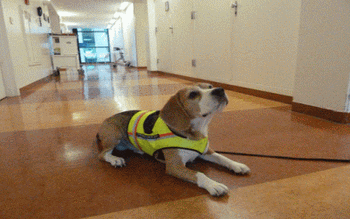
A new study published in BMJ conducted by investigators at two large hospitals in The Netherlands shows that a trained dog was able to detect Clostridium difficile with high estimated sensitivity and specificity, both in stool samples and in hospital patients infected with C. difficile.


The plague-causing bacteria Yersinia pestis evades detection and establishes a stronghold without setting off the body's early alarms. New discoveries reported this week help explain how the stealthy agent of Black Death avoids tripping a self-destruct mechanism inside germ-destroying cells.
Advertisement
Advertisement
Trending on Infection Control Today
1
New Bourbon Virus Case Highlights a Rare Tickborne Disease Many Clinicians May Miss
2
APIC 2026: How a Standardized Surgical Checklist Helped Eliminate Colon Surgical Site Infections
3
APIC 2026: How Active Surveillance and Genomic Sequencing Helped Control a NICU CLABSI Outbreak
4
APIC 2026 Distinguished Scientist Award Honors Researcher Dedicated to Advancing Infection Prevention
5