
News
Advertisement
Advertisement

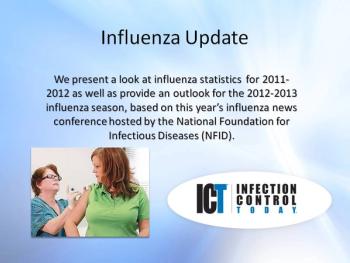
Public health officials and medical experts practiced what they preach by getting vaccinated against influenza during a National Foundation for Infectious Diseases (NFID) news conference Sept. 27. Urging the public to follow suit, experts cautioned that influenza is unpredictable and that last years mild season is not necessarily an indication of what can be expected in 2012-2013 and, even during mild seasons, flu takes a serious toll.

Advertisement
Advertisement
New research showing how the HIV virus targets veterans or memory T-cells could change how drugs are used to stop the virus, Mason researchers say.

When it comes to germ-busting power, the eyes have it, according to a discovery by UC Berkeley researchers that could lead to new, inexpensive antimicrobial drugs. Proteins in the eye can help keep pathogens at bay, finds a new UC Berkeley study.
Advertisement
Advertisement
Trending on Infection Control Today
1
What Is Trichophyton indotineae? Drug-Resistant Ringworm Spreads to 29 Countries
2
Infection Control Today Launches First Digital Magazine for Infection Prevention Professionals
3
ICT Weekly Rounds – September 17, 2026: RIngworm, Measles, Ebola Updates
4
National EVS Week 2026: Why Environmental Services Is Essential to Infection Prevention and Patient Safety
5