





IPC Career
Latest News
Advertisement
Latest Videos






Shorts

0:30
Advocating for Science and Infection Preventionist Voices
6 months ago
0:48
A New Chapter in Infection Prevention Leadership: APIC and SHEA’s HIPAG
6 months ago
0:37
Why Infection Prevention Knows No Borders
6 months ago
0:35
Why No One “Plans” to Join Infection Prevention (But Never Leaves)
6 months ago

0:39
Don't Be Afraid: A Doctor's Advice on Treating Rare Diseases
7 months ago
0:40
Contagious Conversations: Why You Shouldn't Have to Lose Your Identity to Grow Your Career
7 months ago
0:43
Announcing Contagious Conversations: ICT's New Program on the Science, People, and Dynamics of IPC Today
7 months ago

1:02
Being Voice Patient: How Open Communication Empowers Safer Perioperative Care
8 months ago
0:48
How Leaders Can Combat Nurse Burnout and Protect Patient Safety
8 months ago
0:42
Why Stories Matter More Than Data in Health Care
8 months ago

Advertisement
More News

From ultrasound gel safety to high-level disinfection, The Joint Commission’s 2025 surveys are zeroing in on infection prevention hot spots. Are your teams ready?

Infection prevention cannot succeed in silos. From acute care hospitals to long-term care facilities, interdisciplinary teams bring diverse expertise together, transforming safety from an individual responsibility into a shared culture. It’s time for leaders to champion collaboration, empower every role, and embed IPC into daily care delivery.

Experts say AI tools can forecast outbreaks and guide staffing, but limitations remain; technology cannot capture unpredictable tasks or reduce the heavy baseline workload of infection preventionists.
Infection prevention is too often the first program cut when budgets tighten, but experts warn that underfunding leaves hospitals vulnerable. Stronger policies, bigger rewards, and robust vaccination programs are critical to protecting patients and communities.
Infection prevention isn’t one-size-fits-all. Regional disparities, from rural staffing shortages to California’s strict regulations, demand tailored strategies, stronger collaborations, and targeted funding to protect patients everywhere.
Fewer than 14% of infection prevention departments receive staffing support from other hospital units, leaving infection preventionists stretched thin. Experts warn that this lack of collaboration undermines patient safety and strains already limited resources.
This installment of the interview with study authors, survey data reveal rising hours and responsibilities for infection preventionists, with staffing shortages fueling burnout risks and threatening the safety of both patients and health care workers.
Infection preventionists emerged from the COVID-19 crisis carrying heavier workloads, broader responsibilities, and fewer resources. A new study reveals the toll and the urgent need for support.

As hospitals face layoffs and budget cuts, the need to demonstrate IPs' measurable impact has never been greater. For IPs, that means transforming your resume into more than a list of duties: it must tell the story of outcomes, savings, and lives protected. Now is the moment to redefine your role—not as a cost center, but as a catalyst for safety, efficiency, and organizational success.
In a world full of corrections and checklists, don’t underestimate the quiet power of encouragement. One sentence—spoken with sincerity—can spark confidence, courage, and change. Infection preventionists do more than monitor safety; they shape culture. So today, go beyond reminders. Speak life. Name the good. Someone’s future may depend on it.
If you’ve led projects that measurably improved infection prevention and control, it’s time to showcase your impact. The Advanced Leadership Certification in Infection Prevention & Control (AL-CIP) recognizes experienced professionals whose vision, innovation, and expertise have made a difference locally, nationally, or globally.
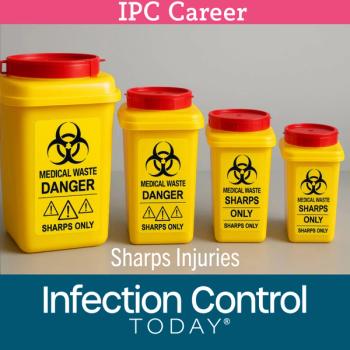
Sharps injuries remain a silent but serious threat in health care that infection preventionists are uniquely equipped to confront. With underreporting widespread and safety devices underused, it’s time for IPs to step into a leadership role, using their expertise in systems thinking, education, and policy to build a culture where staff protection is as prioritized as patient care.
Sharps safety isn’t just an operating room issue—it’s a system-wide concern that demands stronger policies, consistent reporting, and cross-departmental collaboration to truly protect health care workers.
Breaking the Cycle of Silence: Why Sharps Injuries Go Unreported and What Can Be Done
Published: | Updated:
Despite decades of progress in health care safety, a quiet but dangerous culture still lingers: many health care workers remain afraid to report sharps injuries, fearing blame more than the wound itself.
Sharps safety in health care isn’t just about knowing the rules—it’s about changing the culture. In a recent interview with Infection Control Today®, perioperative educator Amanda Heitman shares how fostering a supportive, informed environment can turn safety standards into daily practice.
Sharps safety in health care goes far beyond personal protective equipment. Amanda Heitman outlines a layered strategy of training, communication, and device innovation aimed at reducing needlestick injuries in even the busiest clinical environments.
Despite being a well-known occupational hazard, sharps injuries continue to occur in health care facilities and are often underreported, underestimated, and inadequately addressed. A recent interview with sharps safety advocate Amanda Heitman, BSN, RN, CNOR, a perioperative educational consultant, reveals why change is overdue and what new tools and guidance can help.
Infection preventionists, once hailed as indispensable during the pandemic, now face a sobering reality: budget pressures, hiring freezes, and layoffs are reshaping the field, leaving many IPs worried about their future and questioning their value within health care organizations.
The Certification Board of Infection Control and Epidemiology (CBIC) is calling on infection prevention professionals to help shape the future of the a-IPC exam through a vital new job analysis survey.

Once dominated by nurses, infection prevention now welcomes professionals from public health, lab science, and respiratory therapy—each bringing unique expertise that strengthens patient safety and IPC programs.
Dr Rebecca Crapanzano-Sigafoos explains how at this year’s APIC Annual Conference & Expo in Phoenix, leaders unveiled key initiatives poised to shape the future of infection prevention, including a new research network, an updated MegaSurvey, and a comprehensive guide to catheter-associated bloodstream infection prevention.
Despite its critical role in patient safety, infection prevention and control (IPC) remains one of health care’s most misunderstood and understructured professions. While COVID-19 thrust IPC into the spotlight, the field still lacks a clear entry path, standardized training, and broad institutional recognition, leaving many professionals to learn on the job with minimal guidance.

Infection preventionists are at the forefront of the infodemic; the keynote session offered suggestions on how they can combat and mitigate misinformation.
As federal cuts reshape public health, students nationwide are reacting with fear, frustration, and renewed resolve as they face an uncertain future in the field.
As infection threats evolve and the IP workforce faces burnout and attrition, a new study reveals a critical weak spot: inconsistent access to infection prevention certification—and the training needed to succeed.
Advertisement
Advertisement
Trending on Infection Control Today
1
What Is Causing the 2026 US Measles Outbreak? Vaccination Rates, Travel, and Immigration Examined
2
Chasing the Bundibugyo Outbreak: How Static Numbers Hide a Moving Epidemic
3
Biocidal Hospital Surfaces and HAI Reduction: What a 10-Year NIH-Funded Study Found
4
Lost in Translation: Why CBIC’s New Education Rules Are Raising Questions in the Field
5