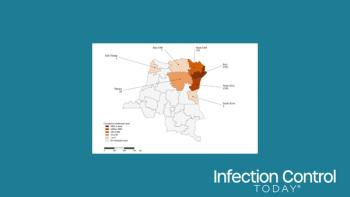
As of this article’s writing, the 2026 Ebola outbreak has spread to 2 African countries, the Democratic Republic of Congo and Uganda, prompting the World Health Organization (WHO) to declare a global health emergency and release a statement of grave concern. Of concern, resources appear to be insufficient to meet the need. The African CDC and the WHO have mobilized 2.5 million dollars to respond to the outbreak. But help from the US is desperately needed. The cutting of 90% of United States Agency for International Development (USAID) funding, along with the US’s withdrawal from the WHO, has severely hampered efforts to control the epidemic.
"Significant staff and funding cuts in the CDC's Epidemic Intelligence Service have hampered the US's ability to respond to outbreaks,” Matthew Pullen, MD, assistant professor of infectious diseases and international medicine at the University of Minnesota, said. “This team, our premier ‘disease detectives,’ helps investigate and contain domestic and international outbreaks, serving both as foreign aid and as a means of preventing the spread of disease. As has been the case in this term and the prior Trump administration, the desire for 'quick political wins' via short-sighted funding cuts will likely have longer-term negative consequences for the country."
Back in 2015, congressional hearings were held regarding an Ebola outbreak in the US. Deborah Burger, RN, copresident of National Nurses United, described severe lapses in infection control and pandemic preparation. The hearings repeatedly emphasized the need to strengthen our public health system. Since then, the US’s response has become only weaker. In 2018, the firing of the United States Global Health Security Team, along with the underfunding of the CDC’s global outreach, left us ill-prepared for the COVID-19 pandemic. Presently, drastic cuts to the CDC have further weakened it, with The Lancet reporting that 80% of the CDC’s top positions are vacant and that an estimated 2000 staff have been fired and another 300 are on administrative leave.
There are 4 strains of the Ebola virus. The current outbreak is caused by the “Bundibugyo virus”, a strain to which there are no approved vaccines or treatments.
Decisive action is needed. As of Sunday, May 17, 2026, the CDC announced there were 300 suspected Ebola cases and 88 deaths. However, on Tuesday, May 19, 2026, the WHO announced there had been more than 130 suspected deaths and 513 cases. According to the CDC, the Bundibugyo virus has death rates from 25 to 50%. At least 6 Americans have been exposed to the disease, and 1 American missionary, Peter Stafford, MD, has tested positive.
The incubation period for Ebola is anywhere from 2 to 21 days, and the disease has 2 phases. The first is characterized by “dry symptoms,” including fever, myalgias, pain, and fatigue. The disease has reduced spread during this phase. The US’s index case in the 2015 outbreak was even initially sent home from the emergency room on antibiotics, and community spread did not occur. Only until the patient entered the second phase of the disease, characterized by the “wet symptoms” of vomiting, diarrhea, and bleeding, did the disease spread to a hospital nurse. Severe lapses in infection control were alleged to have been responsible for the nurse’s infection, with inadequate personal protective equipment PPE) and lack of help and training with donning and doffing.
The likelihood of a large Ebola outbreak in the US is low. The lack of significant asymptomatic spread in the initial phase of the disease, along with the infection mainly spreading in the later phases of the illness, would be expected to hinder community spread. In Africa, the spread of Ebola is facilitated by traditional funeral practices, which include washing the body, touching the deceased’s face, and lying over the corpse. Afterward, hands are washed in a common bowl.
The current Ebola outbreak needs to be a wakeup call. The dismantling of the CDC needs to be reversed, and its capabilities to track infections and respond to global outbreaks need to be restored. It is far better to stop a disease in Africa than to deal with it on our own soil and risk not only horrific disease, but also that the Ebola virus might also find a local animal host.