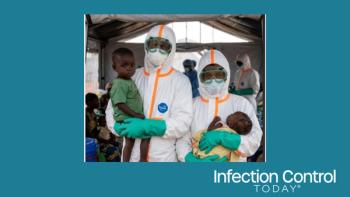
The design of lab coats, a fundamental piece of personal protective equipment (PPE), has remained virtually unchanged since its inception in the 19th century, and this significant design inequity can have life-threatening consequences. Beau Wangtrakuldee, PhD, founder and CEO of AmorSui, recently spoke with Infection Control Today® (ICT®) and has tips and insights on what the industry can and should do to ensure women's safety at work.
The importance of personal protective equipment (PPE) cannot be overstated when it comes to safeguarding the health of health care professionals and patients alike. Yet, amidst PPE's critical role, a glaring issue persists ill-fitting protective gear, particularly for women.
“I think it's a global gender issue. You think about health care, a sector where women comprise 70% of the workforce and 90% of the health care workers, meaning nurses, and the research project has been done internationally. They have done online surveys, such as interviews in 50 countries, and collected feedback from women and health care workers across different types, and it shows that only 14% use PPE that fits them. That is mind-boggling because that means that PPE does not protect people who work in health care. And it's brought up major issues because not having protections that allow someone to do their best work means we, as a society, our global society, do not foster equal opportunity in health care occupations.”
The consequences of ill-fitting PPE can be dire, from masks that slip off faces to isolation gowns that are too large to maneuver in. Not only does it compromise the safety of health care workers, but it also poses a risk to patient care. Imagine a nurse struggling to move swiftly and safely in an oversized gown while attending to infectious patients or working with dirty instruments in the sterile processing department. The discomfort, impediment to mobility, and increased risk of contamination paint a concerning picture of the challenges health care workers face.
“Many studies and data points around PPE for women and health care also show that women tend to be care workers like nurses and have a lower status in doing the work,” Wangtrakuldee told ICT. “They also have access problems to PPE, right? Because the doctor, the surgeon, and whoever at the top gets access first, and then [go] down the bottom and don't get any protection, even though they interact with the patient.”
The problem of ill-fitting PPE extends far beyond individual anecdotes. A global research project spanning 50 countries found that only 14% of health care workers reported using PPE that truly fit them. This statistic is not just a number; it represents a widespread issue that demands immediate attention and action.
In the quest for solutions, education and advocacy emerge as powerful tools. Health care professionals must prioritize their safety by ensuring that their PPE fits properly. This means educating oneself on how to assess the fit of masks, gloves, and other protective gear.
However, the road to widespread change requires collaboration from all sectors. From health care facilities to PPE manufacturers, the call for gender-inclusive sizing and designs grows louder. It is no longer acceptable for safety to be compromised due to generic sizing standards that do not account for health care workers' diverse body shapes and sizes. It is not only about protective gear but the safety, well-being, and effectiveness of those on the frontline of care.
“PPE is a part of our routine in life. You have a lab coat, goggles, gloves, and everything else," Wangtrakuldee said. "And one of the times I was working on toxic chemicals, I had everything on. I had goggles, lab coat, and things like that. But the lab coat was too big. I realized that I had had an accident because the chemical seeped through the lab coat, it got on over my right body, and I was burned as a result and out of commission for a week. And this [accident] is why I started my company on AmorSui.”
Enterprises like AmorSui are at the forefront of the movement towards inclusive and well-fitted PPE. Founded by individuals who have experienced firsthand the consequences of ill-fitting protective gear, AmorSui aims to revolutionize the industry. Offering sizes as small as extra small, AmorSui's mission is clear: to provide health care workers with PPE that not only protects but also fits comfortably.
The time for change is now. Health care professionals deserve proper PPE that allows them to perform their duties safely and effectively. By prioritizing inclusivity, education, and advocacy, we can create a safer and more equitable future for all.