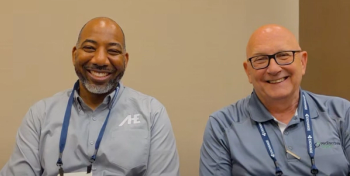
What happens when one disinfectant cannot satisfy every IFU? At AHE in New Orleans, Diane Cullen discusses weighted risk assessment, documenting difficult decisions, and why infection prevention and EVS need to work together.
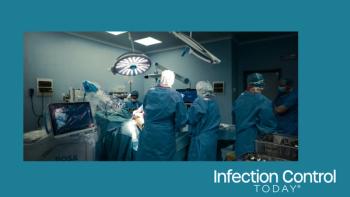
Many scientific advances have been made in the delivery of care and infection prevention for open fractures, but the standard practice of wound cleaning with soap and water before surgery has remain the unchanged. Now, an international team of researchers led by McMaster University in collaboration with the Research Institute of the McGill University Health Centre has found that soap and water is actually less effective than just using saline water.
The findings, which were published in the New England Journal of Medicine, could lead to significant cost savings, particularly in developing countries where open fractures are particularly common.
As part of the study, 2,400 people with open arm or leg fractures had their wounds cleaned with either soap and water, or a saline water solution, and one of three different levels of water pressure. Patients were monitored to see who would need to have an additional operation within 12 months because of infection or problems with wound healing. The researchers found that very low water pressure was an acceptable, low-cost alternative for washing out open fractures, and that the reoperation rate was higher in the group that used soap.
"There has been a lot of controversy about the best way to clean the dirt and debris from serious wounds with bone breaks," says Dr. Mohit Bhandari, principal investigator and a professor of surgery for the Michael G. DeGroote School of Medicine at McMaster. "All wounds need to be cleaned out -- a process known as debridement -- but evidence shows that cleaning wounds with soap was not better than just water, which was unexpected."
"These findings may have important implications for the care of patients with open fractures worldwide since developing countries deal with a disproportionate number of cases," adds one of the study's co-authors, Dr. Edward Harvey, chief of Orthopaedic Trauma at the McGill University Health Centre and a professor of surgery at McGill University. "Most of the time we were using soap and water with a high pressure delivery system to clean the wound, but now we don't, and that makes the best practice much cheaper."
The study involved patients across 41 sites in the United States, Canada, Australia, Norway and India. The majority of patients were men in their 40s with a lower extremity fracture, and the most common reason for the injury was a motor vehicle accident.
The researchers added that their findings may be particularly relevant for low and middle income countries where 90% of road traffic fatalities, and probably a similar proportion of open fractures, occur, according to the World Health Organization.
The research was funded by the Canadian Institutes for Health Research, the U.S. Army Institute of Surgical Research Orthopedic Trauma Research Program, the U.S. Army Institute of Surgical Research Peer Reviewed Orthopedic Research Program and the Association Internationale pour l'Ostéosynthèse Dynamique.
Source: McMaster University