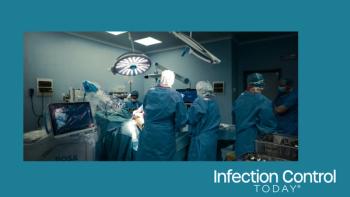
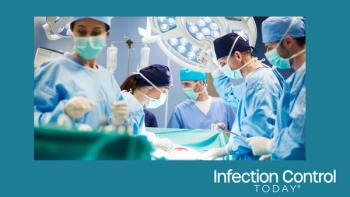
Surgical smoke has been part of operating room culture for decades, generated routinely by lasers, electrosurgical devices, and ultrasonic tools. Yet despite its constant presence, it remains one of the least understood and least consistently addressed risks in perioperative care.
In a recent interview with Infection Control Today® (ICT®), Vangie Dennis, MSN, RN, CNOR, CMLSO, FAORN, FAAN, a former president of AORN and current member of the ICT’s Editorial Advisory Board, made it clear that this normalization has contributed to a dangerous blind spot in health care.
“It is a hazard that sometimes we’ve been doing it for so many years… it is just part of the culture,” Dennis, who is also a health care consultant with Perioperative Consulting, LLC, said, describing how familiarity has dulled concern across the field.
A Risk That Extends Beyond the Surgical Field
Dennis, who is also a perioperative nurse executive and speaker, stressed that one of the biggest misconceptions about surgical smoke is who it affects. While many clinicians associate exposure primarily with surgeons, the reality is far broader.
She pointed to overlooked patient risks, particularly in vulnerable scenarios such as cesarean deliveries or procedures under monitored anesthesia.
“The patients are affected by the surgical smoke,” she said. “What about the baby’s first breath on a C-section… the nurse who’s pregnant… that unborn baby is exposed to surgical smoke.”
This framing expands the conversation from occupational safety alone to a shared exposure risk across the entire perioperative team and patient population.
“It really affects everybody in that perioperative platform when we generate smoke,” Dennis added, emphasizing that no one in the room is truly isolated from exposure.
Understanding the Science Behind the Smoke
Dennis explained that the source of the smoke matters less than many clinicians believe. Whether generated by lasers, electrosurgery, or other heat-producing devices, the resulting plume contains harmful components.
“Any heat-generating device will create a surgical plume or smoke… it’s all bad for you,” she said, underscoring that differentiation between technologies does not equate to differences in safety.
She reinforced this point with a lesson from early in her career, recalling a physician who distilled the issue bluntly.
“He said, there’s no such thing as safe smoke,” Dennis noted.
To make the risk more tangible, she cited common comparisons used in education and research.
“One gram of tissue vaporized by a laser is equivalent to 3 unfiltered cigarettes… by an electrosurgical device, 6 unfiltered cigarettes,” she said.
However, Dennis emphasized that even this comparison may underestimate the danger, given the biological and chemical complexity of surgical smoke, which includes human tissue, blood particles, and toxic gases such as benzene and formaldehyde.
Health Effects That Accumulate Over Time
Dennis described both the immediate and long-term health consequences associated with repeated exposure. Early in her career, she experienced symptoms that many perioperative staff still report today.
“You had headaches… your eyes are burning… nausea, fatigue,” she said, recalling the physical effects of prolonged exposure during smoke-heavy procedures.
While these symptoms may seem transient, Dennis emphasized that chronic exposure could lead to more serious outcomes.
“I know several of my friends… one has adult-onset asthma, and the other has stage 2 [chronic obstructive pulmonary disease],” she said, highlighting the potential progression from irritation to long-term respiratory disease.
She also pointed to the presence of mutagenic and carcinogenic compounds in surgical smoke.
“We’re being exposed to toxic gases and volatile organic compounds… these are all mutagenic and carcinogenic chemicals,” she explained, reinforcing that the risks are not hypothetical.
In addition to respiratory concerns, Dennis discussed infection risks, noting that viable viral particles have been identified in surgical smoke.
“There has been documented, proven risk,” she said, referencing studies involving pathogens such as [human papillomavirus (HPV)].
The Persistent Awareness Gap
Despite decades of research and guidance, Dennis believes the greatest barrier to progress remains a lack of awareness.
“It is the unknown,” she said. “If you don’t see it, smell it, touch it, it’s not real, but it is real.”
This gap extends beyond clinicians. Dennis highlighted that many ancillary staff, including environmental services personnel, are rarely educated about surgical smoke exposure.
“If I walked up to anybody with [environmental services], I bet they would have no idea,” she said, pointing to missed opportunities for broader organizational engagement.
For infection prevention professionals, this underscores the need to expand education beyond traditional clinical roles and create a more unified approach to risk communication.
Why PPE Alone Is Not Enough
Dennis also addressed a common misconception regarding personal protective equipment (PPE), particularly surgical masks.
“The surgical mask is designed to protect the patient from you… not you from the patient,” she said, clarifying its intended purpose.
She explained that standard masks are not capable of filtering the fine particulate matter found in surgical smoke.
“They will not protect you,” she added, emphasizing that reliance on masks alone is insufficient.
Engineering Controls and Practical Solutions
Instead, Dennis pointed to engineering controls as the most effective intervention.
“The first line of defense… is local exhaust ventilation, smoke evacuation systems,” she said.
However, she stressed that proper use is just as important as availability. Smoke must be captured close to its source to be effective.
“Within inches of the source… about 2 inches,” she explained, noting that even small deviations can allow contaminants to disperse widely in the room.
Moving Toward System-Level Change
Dennis has been actively involved in legislative efforts to mandate smoke evacuation practices. While some states have adopted regulations, others continue to lag behind.
“We have to go state by state by state,” she said, describing the slow and uneven pace of change.
At the organizational level, she emphasized the importance of aligning safety initiatives with measurable outcomes and leadership priorities.
“You can’t manage what you can’t make measurable,” she said, highlighting the need to connect exposure risks with operational and financial data.
She also pointed to workforce implications, noting that safety investments can influence recruitment and retention.
“They want to know you care,” Dennis said, reinforcing that culture and leadership play a critical role in sustaining change.
The Bottom Line for Infection Prevention
Ultimately, Dennis believes the path forward requires a coordinated effort across education, policy, and practice.
“Compliance and culture change is the biggest barrier,” she said, acknowledging that awareness alone is not enough.
She urged health care organizations to act proactively rather than reactively.
“Let’s not wait till we have hurt ourselves… before we make this compliance and culture change,” Dennis concluded.
For infection prevention and control personnel, the message is clear. Surgical smoke is not a minor nuisance. It is a persistent and preventable exposure risk that demands attention, advocacy, and action across the entire health care system.