What happens when one disinfectant cannot satisfy every IFU? At AHE in New Orleans, Diane Cullen discusses weighted risk assessment, documenting difficult decisions, and why infection prevention and EVS need to work together.
Two investigators from Australia spoke with ICT about how management tools can overcome health care worker reluctance and implement OR safety improvements.
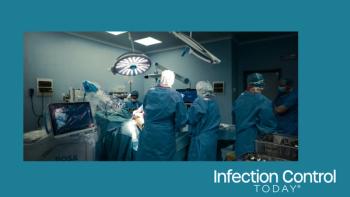
Continually improving safety in the operating room (OR) remains an issue for both patient and staff. A presentation at the Association of PeriOperative Nurses (AORN) 2023 Conference in San Antonio, Texas, held from April 1-4, 2023, discussed one hospital’s study on how to overcome the difficulty in creating a sustainable change that lasts beyond the initial trial or input of change, specifically when new infection control guidelines come out.
Mairin Monteath, BA, program officer, education and advocacy, Chamindika Konara, PhD, contributor,
“So throughout this process [of the study], we had a look at how this hospital was doing things so well, Monteath told ICT. “One of the things that came out of it, which is what our presentation follows through their case study, is that [management tools] create that sense of urgency among the perioperative nurses. They got everyone involved, and that is the most important thing to do as a change leader. [In the case study,] they implemented it with their current processes so that it didn't feel as much like a big change as it could have been.
Konara agreed, “And while the case studies from Australia and one particular hospital, what we observed throughout that process can be applied to any change management, especially within our setting….while this is an individual case, study how that can b applied in a number of different situations as well.”
Everything matters in health care—even the little things. “There are so many theoretical frameworks for enacting change in health care and other industries,” Monteath said. “But the most important thing is to acknowledge that every little contribution does make a big difference, even if it's not obvious to the individual nurse while [the change] is going through the implementation. The idea is that all perioperative nurses have the power to help make a change to make things safer for staff and patients.”
about 3 years ago
Are You Reinventing the Wheel?about 3 years ago
Minimizing Health Risks: Controlling Mold in Health Care Settingsabout 3 years ago
3D-Printed PPE: Promising Solution or Contamination Risk?about 3 years ago
Bug of the Month: Keep Your Fingers Out of Your Mouth!over 3 years ago
Preparing for a Candida auris Outbreak in Long-Term Careover 3 years ago
Surgical Site Infection Surveillance