
News
Advertisement
Advertisement
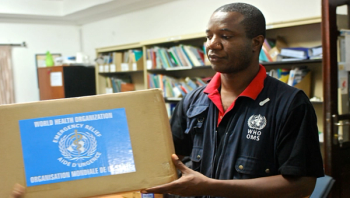
In response to continuing reports of new cases and deaths attributable to Ebola virus disease (EVD) in Guinea, Liberia, and Sierra Leone, WHO today activated a Sub-regional Outbreak Coordination Center in Conakry, Guinea.
Advertisement

Antibiotic resistance is depleting our arsenal against deadly diseases and infections, such as tuberculosis and Staph infections, but recent research shows promise to speed up the drug discovery process. In a study reported in ACS Chemical Biology, University of Illinois researchers developed a new technique to quickly uncover novel, medically relevant products produced by bacteria.

It was humid, muddy and raining when World Health Organization (WHO) staff approached a compound in heavily populated New Kru Town, outside Monrovia, Liberia to look for people who have had contact with people infected with Ebola. A WHO technical adviser from Rwanda, sent in to help the zone coordinator, spoke to a woman who had cared for an Ebola patient. She understood the need to be monitored for the disease, but another man with whom the team talked denied knowing anyone with Ebola and refused further contact with the team.
With the U.S. healthcare reform mandate for increasing transparency and improved quality, the need for infection prevention and control in long-term care facilities (LTCFs) is becoming more critical than ever before for the more than 3 million Americans receiving geriatric care in U.S. annually. In January, the Association for Professionals in Infection Control and Epidemiology (APIC) published the Infection Preventionist’s Guide to Long-Term Care to assist facilities in creating and implementing comprehensive infection prevention programs.
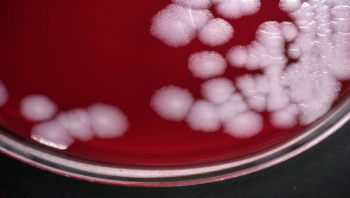

Many studies have shown that more severe illness and even death are likely to result if you develop a secondary respiratory infection after developing influenza. Now, however, a team of researchers based at The Wistar Institute has determined that if you reverse the order of infection, the bacteria Streptococcus pneumoniae (often called pneumococcus) may actually protect against a bad case of the flu.
Advertisement
Advertisement
Trending on Infection Control Today
1
Hantavirus Concerns and Cruise Ship Hygiene: What Infection Preventionists Need to Know
2
Education, Advocacy, and Recognition: Malinda Elammari on the Future of Sterile Processing
3
IP LifeLine: Connecting With Specialized Recruiters and Navigating the Hiring Process
4