
News
Advertisement
Advertisement
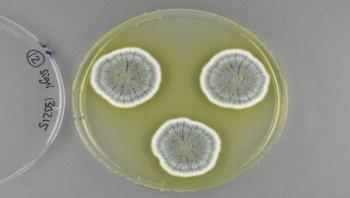
Fungi are a potential goldmine for the production of pharmaceuticals. This is shown by researchers at Chalmers University of Technology, who have developed a method for finding new antibiotics from nature's own resources. The findings, which could prove very useful in the battle against antibiotic resistance, were recently published in the journal Nature Microbiology.
Advertisement
Researchers at Johns Hopkins and George Washington universities report new evidence that proteins created by defective forms of HIV long previously believed to be harmless actually interact with our immune systems and are actively monitored by a specific type of immune cell, called cytotoxic T cells.
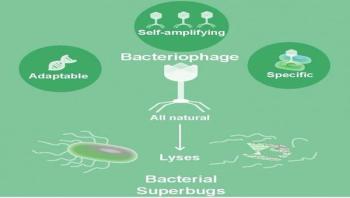
Viruses that specifically kill bacteria, called bacteriophages, might one day help solve the growing problem of bacterial infections that are resistant to antibiotic treatment. Researchers at Baylor College of Medicine and the Michael E. DeBakey Veterans Affairs Medical Center have determined that phages can effectively reduce bacterial levels and improve the health of mice that are infected with deadly, antibiotic-resistant bacterial 'superbugs.' The study appears in Scientific Reports.
Q: In reviewing our manual high-level disinfection (HLD) records, I noted that on several occasions, the temperature of the solution did not reach the manufacturer’s recommended temperature. The technician did not notify the supervisor of this problem and the following technicians never noted this error on the log. What should we do?

Margaret Chan, director-general of the World Health Organization (WHO) has issued the following statement regarding a report, "Ten Years in Public Health 2007-2017," that chronicles the evolution of global public health over the decade that she has served in WHO leadership.
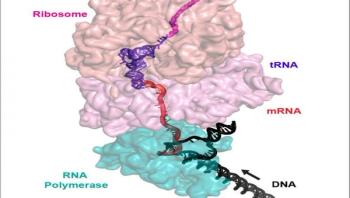
There are many processes that take place in cells that are essential for life. Two of these, transcription and translation, allow the genetic information stored in DNA to be deciphered into the proteins that form all living things, from bacteria to humans to plants. Scientists have known for half a century that these two processes are coupled in bacteria, but only now have they finally had a look at the structure that makes this possible. In a paper published in Science on April 13, 2017, biochemists from the University of Wisconsin-Madison and the Max Planck Institute (MPI) for Biophysical Chemistry in Germany have revealed the defined architecture of what is called the "expressome."
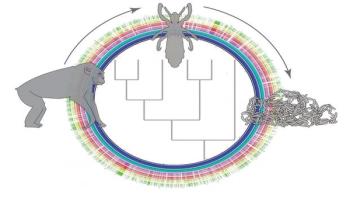
Head lice have been stigmatized, quickly conjuring images of infested school children and parents combing through their hair. This social stigma reaches many of the estimated 14 million people who are annually infested in the U.S. alone. However, these blood sucking lice have had a long and complex evolutionary history tied to humans and other mammals. In total, there are 532 species of blood sucking lice and each species parasitizes one or just a few mammal species. In the past, scientists have taken advantage of the close associations of lice to their hosts to approach questions of human evolution. Research is now moving to the bacteria associated with these lice.

Countries are not increasing spending fast enough to meet the water and sanitation targets under the Sustainable Development Goals (SDGs), says a new report published by the World Health Organization (WHO) on behalf of UN-Water – the United Nations inter-agency coordination mechanism for all freshwater-related issues, including sanitation.
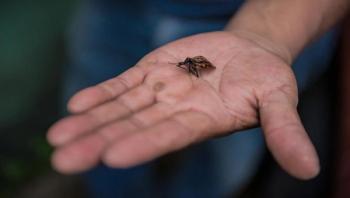
A study of almost 5,000 Latin American-born residents of Los Angeles County found that 1.24 percent tested positive for Chagas disease, a parasitic infection that can cause life-threatening heart damage if not treated early. Chagas disease is one of the leading causes of heart failure in Latin America.
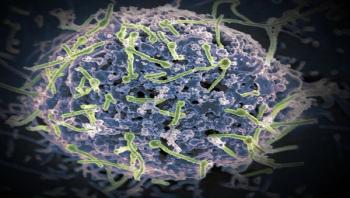
Analysis of daily gene activation in a patient with severe Ebola virus disease cared for at the National Institutes of Health (NIH) in 2015 found changes in antiviral and immune response genes that pinpointed key transition points in the response to infection. The changes included a marked decline in antiviral responses that correlated with clearance of virus from white blood cells. The analysis also showed that the preponderance of host responses shifted rapidly from activation of genes involved in cell damage and inflammation toward those linked to promotion of cellular and organ repair. This pivot came before the first signs of clinical improvement in the patient, who was admitted to the NIH Clinical Center on day 7 of illness and remained for 26 days. Researchers from the NIH's National Institute of Allergy and Infectious Diseases (NIAID) led the study.
Advertisement
Advertisement