






Operating Room
Latest News
Advertisement
Latest Videos


CME Content


Advertisement
More News

At AORN 2026 in New Orleans, a colorectal SSI bundle shows how standardized intraoperative nursing practices, interdisciplinary collaboration, and data tracking can reduce infections and improve surgical outcomes.
At AORN26 in New Orleans, a poster highlights surgical smoke risks, urging nationwide evacuation policies to protect health care workers and patients and strengthen nurse-led advocacy for safer operating rooms.
At AORN 2026, experts highlight gaps in endoscope reprocessing, stressing pre-cleaning, visual inspection, and borescope use to improve patient safety and strengthen perioperative and sterile processing collaboration.
At AORN 2026, experts highlight how dedicated perioperative infection preventionists reduce surgical site infections, improve staff engagement, and drive ROI through standardized practices, real-time education, and data-driven strategies.
AORN26 highlights a colorectal SSI prevention bundle using evidence-based isolation techniques, interdisciplinary collaboration, and audit tracking to improve compliance and reduce infection risk in perioperative practice.
AORN26 highlights a multidisciplinary, culture-driven approach that reduced colon surgical site infections by over 27%, demonstrating how standardized bundles, collaboration, and perioperative alignment can significantly improve patient outcomes.
AORN26 highlights how using the teach-back method during PACU discharge education improved patient understanding and reduced surgical site infections, demonstrating the critical role of communication in infection prevention beyond the OR.
At AORN 2026, Erica Smith, DrPH, MBA, shares a practical framework for turning infection prevention guidelines into flexible, sustainable policies that help perioperative teams improve compliance without overwhelming staff or overcomplicating protocols.
AORN26 highlights how collaboration between the operating room and sterile processing department (SPD) reduced instrument contamination, minimized case delays, and improved patient safety, reinforcing the critical role of SPD partnerships in perioperative infection prevention.
AORN26 highlights a hands-on Scrub Bootcamp program that improves perioperative nurse readiness, confidence, and procedural skills, offering a scalable model to strengthen operating room training and patient safety.

This 6-part series chronicles the journey of 2 infection prevention leaders, Brenna Doran and Jessica Swain, who partnered to research and shed light on the critical issue of IP staffing in the current health care landscape. The fourth article in the series will focus on the impact of geographic variations and staffing models on the support for infection prevention programs.

What is surgical smoke? Why is it dangerous? Vangie Dennis, MSN, RN, CNOR, CMLSO, FAORN, FAAN, a member of Infection Control Today's editorial advisory board, explains.

A former infection prevention professional shares his battle with MRSA and sepsis, revealing the lasting impact of health care–associated infections and why vigilance, accountability, and patient advocacy matter more than ever.

Peptilogics' PLG0206 represents a breakthrough innovation in infectious disease. First drug designed specifically to penetrate and kill biofilm-protected bacteria. RETAIN Phase 2/3 trial now enrolling patients with prosthetic joint infection. The previous phase showed 93% infection-free rate. It could revolutionize the treatment of medical device-related infections.

A new human factors study reveals the hidden complexity behind sterile processing. Research from the Medical University of South Carolina shows how sterile processing, operating rooms, and courier networks function as one interconnected system. Understanding “work as done” rather than “work as imagined” may be key to improving surgical safety and supporting frontline staff.

Over 50% of surgeries experience delays that increase the risk of infection. Tampa General's ambient AI reduced OR turnover times by 12%, preventing dangerous complications and enabling more than 832 additional cases annually. Real-time data transforms surgical safety and efficiency.

When sterile instruments look perfect but hidden soil remains, patient safety is at risk. In this in-depth ICT article, Marjorie Wall, EDBA, CRCST, CIS, CHL, CSSBB, explains why ultrasonic cleaning is not just equipment, but a critical quality system, and how failures in cavitation, lumen flushing, or water quality can quietly undermine infection prevention in the operating room and sterile processing department.

From Joseph Lister to modern airflow engineering, operating room safety depends on more than sterile technique. This in-depth review explains why EVS, airflow control, objective cleaning verification, and SPD coordination are critical to reducing surgical site infections and building high-reliability perioperative environments.

Carbapenemase-producing Enterobacterales (CPE) are increasing nationwide, with harder-to-treat NDM strains reshaping the resistance landscape. In this Q&A, Lucas Schulz, PharmD, explains why rapid diagnostics and stewardship are critical to protecting patients and preserving last-line antibiotics.

Clean vs Sterile Gloves in Low-Risk Surgery: Rethinking Infection Risk and Surgical Costs
Published: | Updated:
What if sterile gloves are not always the safest or smartest choice? Evidence from dermatologic surgery suggests nonsterile gloves can deliver comparable infection outcomes in low-risk procedures while saving tens of thousands of dollars annually. This analysis asks whether hair restoration surgery deserves the same evidence-based reexamination.

As 2026 begins, Infection Control Today®'s Editorial Advisory Board reflects on a challenging year shaped by misinformation, policy uncertainty, and relentless change, reaffirming a commitment to science, truth, and supporting IPC professionals who keep showing up for patients and public health.

Are you curious what the Top 5 Infection Control Today interviews were in 2025? Read this article to find out.

Look back with ICT at their print issues and look ahead at what ICT's 30th year will hold!
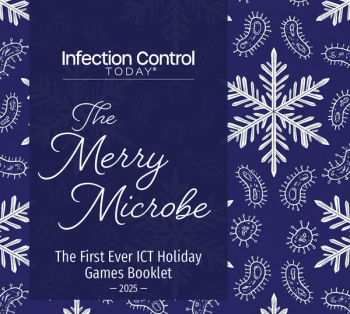
To celebrate and thank the infection prevention community, Infection Control Today® introduces The Merry Microbe, a festive holiday games booklet filled with quizzes, puzzles, and crosswords designed to educate, engage, and bring a little joy to the vital work of keeping health care environments safe.

ICT’s top articles of 2025 spanned essential glove-use standards, CDC guidance on H5N1 monitoring, AI-driven infection prevention in operating rooms, advanced influenza surveillance for public health reporting, and APIC’s warning on communication restrictions that threaten outbreak response. Together, they highlight the evolving, high-stakes role of infection prevention in safeguarding health care and communities.
Advertisement
Advertisement
Trending on Infection Control Today
1
IDWeek 2026: Hospital Drain Snakes May Harbor Carbapenemase-Producing Organisms
2
NICU MRSA Outbreak: Whole Genome Sequencing Guides Infection Prevention Investigation
3
IDWeek 2026: Viral Hemorrhagic Fever Exposure and Infection Risk in Health Care Workers
4
Nursing Home Roommates and MDRO Carriage: MRSA, ESBL, and VRE Study Findings
5