






Operating Room
Latest News
Advertisement
Latest Videos







Advertisement
More News
To celebrate and thank the infection prevention community, Infection Control Today® introduces The Merry Microbe, a festive holiday games booklet filled with quizzes, puzzles, and crosswords designed to educate, engage, and bring a little joy to the vital work of keeping health care environments safe.

ICT’s top articles of 2025 spanned essential glove-use standards, CDC guidance on H5N1 monitoring, AI-driven infection prevention in operating rooms, advanced influenza surveillance for public health reporting, and APIC’s warning on communication restrictions that threaten outbreak response. Together, they highlight the evolving, high-stakes role of infection prevention in safeguarding health care and communities.

Thank you, IPC professionals, from Infection Control Today!
Sterile technique, specialized training, patient safety—Certified Surgical Technologists do it all. Learn how their role is evolving in today’s high-tech operating room.

From ultrasound gel safety to high-level disinfection, The Joint Commission’s 2025 surveys are zeroing in on infection prevention hot spots. Are your teams ready?

Check out the latest print edition of Infection Control Today: September/October 2025.

How can health care facilities and health providers implement point-of-use (POU) instrument care? Here’s a closer look at the entire process, the principles guiding its implementation, and the potential barriers to implementing point-of-use instrument care.
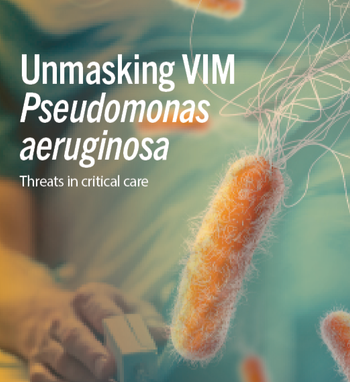
VIM-producing Pseudomonas aeruginosa isn’t just surviving in ICUs; it’s thriving. With mortality rates exceeding 30%, colonization risks hiding in drains, devices, and even donor milk, IPs must take proactive steps to outsmart this pathogen. Now is the time to double down on environmental controls, risk factor recognition, and surveillance strategies. Let’s break the biofilm cycle before the next outbreak takes root.
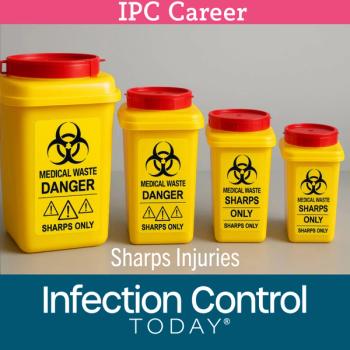
Sharps safety isn’t just an operating room issue—it’s a system-wide concern that demands stronger policies, consistent reporting, and cross-departmental collaboration to truly protect health care workers.
Breaking the Cycle of Silence: Why Sharps Injuries Go Unreported and What Can Be Done
Published: | Updated:
Despite decades of progress in health care safety, a quiet but dangerous culture still lingers: many health care workers remain afraid to report sharps injuries, fearing blame more than the wound itself.
From unsterilized surgical tools in Colorado to a years-long methicillin-resistant Staphylococcus aureus (MRSA) outbreak in Virginia and a surging measles crisis in Canada, recent headlines reveal the fragile front lines of infection prevention and the high stakes when systems fail.
Despite being a well-known occupational hazard, sharps injuries continue to occur in health care facilities and are often underreported, underestimated, and inadequately addressed. A recent interview with sharps safety advocate Amanda Heitman, BSN, RN, CNOR, a perioperative educational consultant, reveals why change is overdue and what new tools and guidance can help.

The Next Frontier in Infection Control: AI-Driven Operating Rooms
Published: | Updated:
Discover how AI-powered sensors, smart surveillance, and advanced analytics are revolutionizing infection prevention in the OR. Herman DeBoard, PhD, discusses how these technologies safeguard sterile fields, reduce SSIs, and help hospitals balance operational efficiency with patient safety.

Take 5 minutes to catch up on Infection Control Today’s highlights for the week ending July 13, 2025.
A 758-bed quaternary medical center slashed catheter-associated urinary tract infections (CAUTIs) by 45% over 2 years, proving that disciplined adherence to fundamental prevention steps, not expensive add-ons, can reverse the pandemic-era spike in device-related harm.

Flexible endoscopes revolutionized modern medicine—but their complex design poses persistent sterilization challenges. With mounting infection risks and emerging innovations, experts are rethinking how to clean and safeguard one of health care’s most indispensable tools.
With surgical site infections on the rise, experts argue that systemic antibiotics fall short, and targeted drug delivery may be the future of surgical infection prevention.

Invisible yet deadly, endotoxins evade traditional sterilization methods, posing significant risks during routine surgeries. Understanding and addressing their threat is critical for patient safety.

Far-UVC technology offers a promising solution for continuous disinfection in occupied spaces, with growing evidence supporting its safety, efficacy, and potential in health care environments.

A rare Tennessee outbreak of Mycobacterium fortuitum revealed deep gaps in infection prevention at outpatient surgery centers—where oversight, staffing, and reporting often fall short.
The disbanding of HICPAC has left infection prevention experts scrambling to preserve national standards and ensure continuity amid growing concern over science-driven public health policy. Connie Steed, MSN, RN, CIC, FAPIC, speaks with ICT.
Two new studies reveal troubling contamination in both new endoscopes and cleaned lumened surgical instruments, challenging the reliability of current reprocessing practices and manufacturer guidelines.

A routine audit at Texas Children’s Hospital uncovered systemwide gaps in sterile processing, revealing deeper issues and reinforcing the critical role of education and equipment oversight.

A new study presented at the 2025 SHEA Spring Conference reveals that while infectious disease consults do influence hospitalists’ use of broad-spectrum antibiotics, the relationship is anything but straightforward—challenging assumptions in antimicrobial stewardship and offering new insights into prescribing behavior.

Elizabeth (Betty) Casey, MSN, RN, CNOR, CRCST, CHL, is the SVP of Operations and Chief Nursing Officer at Surgical Solutions in Overland, Kansas. This SPD leader reframes preparation, unpredictability, and teamwork by comparing surgical services to the Kentucky Derby to reenergize sterile processing professionals and inspire systemic change.
Advertisement
Advertisement
Trending on Infection Control Today
1
How Purposeful Infection Prevention Rounding Supports Patient Safety and EVS Collaboration
2
The Clean Bite: Making Dental Infection Control Part of Every Day
3
ICT Weekly Rounds: Genomic Surveillance Wins, Reprocessing Drift, and a Century-Old Measles Warning
4