





Operating Room
Latest News
Advertisement
Latest Videos





Shorts
0:39
Why Every Operating Room Needs a Dedicated Infection Preventionist
3 months ago
0:43
The "Department of Weird Questions" in the Operating Room
3 months ago
0:40
Why Infection Preventionists Must Attach a 'Dollar Sign' to Their Work
3 months ago

1:02
Being Voice Patient: How Open Communication Empowers Safer Perioperative Care
8 months ago
1:01
The Most Important Day of a Patient’s Life Starts With Education and Infection Prevention
8 months ago
0:48
How Leaders Can Combat Nurse Burnout and Protect Patient Safety
8 months ago
0:42
Why Stories Matter More Than Data in Health Care
9 months ago
1:02
The Perioperative Nurse Difference: Advocacy When Patients Cannot Speak
9 months ago

0:52
Unsung Heroes: Elevating EVS as Full Partners in Infection Prevention
a year ago
by
Tori Whitacre Martonicz, MA

1:22
Far-UVC: Clean Air for All, Not Just a Privilege
a year ago
by
Tori Whitacre Martonicz, MA
CME Content



Advertisement
More News

Infection Control Today's Educator of the Year Award Official Rules
Published: | Updated:
Here are the formal rules for the 2026 Winner of the Infection Control Today’s Educator of the Year Award™.
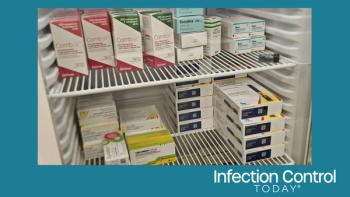
Hospitals still rely on manual temperature checks for vaccines, meds, blood, and lab samples, risking costs and safety. Automation improves adherence, reduces waste, boosts efficiency, and enables real-time visibility for smarter operations.

Sepsis diagnoses are increasing, but are health systems measuring true clinical deterioration or changes in documentation? A new perspective explores how real-time surveillance and coordinated workflows can improve sepsis response and patient outcomes.

How much infection prevention training should volunteers receive before participating in medical missions? A new perspective in Infection Control Today follows one college student's experience volunteering in rural Cambodia, where he was asked to perform clinical tasks well beyond his training. Years later, he realized just how many infection prevention risks he had unknowingly encountered. The article explores what his experience reveals about volunteer preparation, resource-limited care, and why basic infection prevention education should be considered essential for anyone participating in clinical outreach. Read the full story.

Gian Maria Rossolini, MD, discusses antimicrobial resistance, global surveillance, emerging drug-resistant pathogens, and how clinical microbiology can help improve patient outcomes and public health.

Could a badge, cell phone, or home-laundered scrub top contribute to infection transmission? AORN's updated 2025 Guideline for Surgical Attire reinforces that surgical attire is much more than a uniform. From laundering practices and beard covers to cleaning personal devices, the recommendations position attire as a key component of infection prevention and patient safety across the perioperative environment.
Many infection preventionists from nonclinical backgrounds experience imposter syndrome despite demonstrating strong technical expertise and measurable patient safety outcomes. This commentary explores how mentorship, leadership development, and organizational support can strengthen professional identity, improve retention, and help the infection prevention profession embrace diverse educational pathways.

A new lawsuit alleges a contaminated Olympus duodenoscope transmitted a VRE infection during an ERCP, renewing concerns about endoscope reprocessing, device design, biofilm, and infection prevention and control (IPC) practices. What should IPC professionals know?

Think you know your infection control acronyms? Test your expertise with our ICT Expert Acronym Challenge! From CLABSI to VRE, this 20-question puzzle covers essential health care-acquired infection prevention terminology that every infection control professional should master. How many can you match correctly? Try the challenge now! Perfect for IPC specialists, infection prevention coordinators, and health care epidemiologists!

Emerging breath analysis technologies could provide faster, less invasive detection of bacterial infections and help clinicians monitor antibiotic response, though significant research and regulatory hurdles remain before widespread clinical adoption.
After identifying 2 colon surgical site infections in 2024, Orlando Health South Lake Hospital implemented a standardized perioperative checklist to improve adherence with colorectal SSI prevention practices. Presented at APIC 2026, the project increased appropriate antibiotic prophylaxis, reduced inappropriate antibiotic use, maintained 100% adherence with clean-dirty instrument protocols, and was associated with the elimination of additional colon SSIs during 2025.

A poster at the APIC Annual Conference and Exposition held from June 15 to 17, 2026, in Nashville, Tennessee. After managing bloodborne pathogen exposures affecting more than 3,000 patients, Providence Health & Services developed a multidisciplinary playbook to improve preparedness, communication, and response during future large-scale events.

An APIC26 poster described a systemwide initiative at Memorial Hermann Health System that improved staff understanding, consistency, and confidence in medical device cleaning and disinfection through education, manufacturer collaboration, and hands-on demonstrations.

A quality improvement initiative at Ocean University Medical Center found that reinstating hands-on urinary catheter competency training was associated with a 46% reduction in CAUTIs and improved infection metrics.
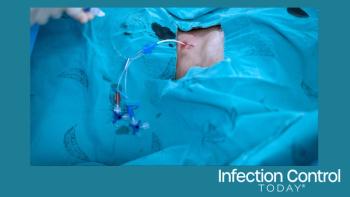
When it comes to CLABSIs, the problem is not a lack of knowledge. It is that prevention still depends too heavily on perfect execution inside imperfect systems.
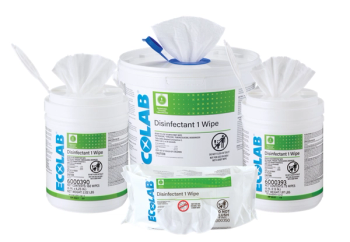
How plastic‑free wipes are helping hospitals reduce waste while delivering disinfecting performance.

A 7-year study at a 1,900-bed academic medical center in Singapore found no epidemiological link between contaminated endoscopes and postprocedural bloodstream infections, despite routine microbiological surveillance detecting residual contamination.

Sterile Processing Under Pressure: What Penn State Health’s Instrument Sterilization Crisis Reveals About Patient Safety Risks
Published: | Updated:
Sterile processing departments are often called the invisible backbone of surgical care, but a recent investigation involving Penn State Health and Milton S. Hershey Medical Center highlights what can happen when those systems come under pressure. Reports of contaminated instrument trays, sterilization backlogs, staffing strain, and communication breakdowns are raising broader questions about patient safety, infection prevention infrastructure, and operational priorities across health care. ***Updated with an answer from Penn State Health.

On World Hand Hygiene Day (May 5), new insights highlight a critical gap: even when compliance is documented, sanitizer dose size may limit effectiveness, making proper ABHR dosing essential for true infection prevention.

A Kansas jury awarded $7.65 million in a fatal KU Medical infection case tied to contaminated heater-cooler devices, renewing attention on Mycobacterium chimaera risks, device disinfection failures, and patient safety in cardiac surgery.
A case study presented at HSPA 2026 revealed how 2 VA facilities overcame persistent bacteria, conductivity, and biofilm issues in sterile processing water systems through recirculation, system mapping, and multidisciplinary collaboration.

Improper glove use in health care can turn protective barriers into vectors of infection, increasing contamination risks, cross-transmission, and HAIs when hand hygiene and proper protocols are not consistently followed.

At AORN 2026, Colleen Becker, PhD, MSN, RN, CCRN-K, highlights how nursing education must evolve with technology, generational learning styles, and workforce shortages to better prepare nurses for modern health care challenges.
At AORN 2026 in New Orleans, a colorectal SSI bundle shows how standardized intraoperative nursing practices, interdisciplinary collaboration, and data tracking can reduce infections and improve surgical outcomes.
At AORN26 in New Orleans, a poster highlights surgical smoke risks, urging nationwide evacuation policies to protect health care workers and patients and strengthen nurse-led advocacy for safer operating rooms.
Advertisement
Advertisement