|Articles|October 20, 2015

CDC's Safe Healthcare Blog: Clean Hands Stop Germs

Today, on CDC’s Safe Healthcare Blog, Laura Buford with the Association for Professionals in Infection Control and Epidemiology (APIC), calls for healthcare professionals to pledge to prevent infections by cleaning their hands in honor of International Infection Prevention Week (IIPW).

Everyone, both healthcare providers and patients, has important roles to play. APIC has created new ‘Clean hands stop germs’ posters, stickers and decals encouraging patients and families to ask their providers questions about hand hygiene.

The American Hospital Association (@AHAHospitals) and APIC (@APIC) will host a Twitter chat focusing on how patients and healthcare providers can work together to reduce healthcare-associated infections on Oct. 21, 2015 at 12 p.m. EDT. The hashtag for the chat is #IIPWChat.

Join the conversation at: http://blogs.cdc.gov/safehealthcare/

For more information on IIPW: http://professionals.site.apic.org/


Related to this article

A group of students raising their hands in class during a lecture  (Adobe Stock 292282454 by Mediteraneo
How do you celebrate an infection that never happened? That's one of the unusual challenges infection preventionists share with teachers. Both can spend their careers changing outcomes they may never see. Both educate people who don't always want to listen. Both are second-guessed. Both face burnout. And both must somehow keep remembering why they started.
Bug of the Month
The Bug of the Month helps educate readers about existing and emerging pathogens that are clinically important in today's health care facilities. This month’s Bug of the Month isn’t quite like anything we’ve featured before. Can you solve the clues before the final reveal?
Person washing hands. (Adobe Stock 200575602 By kieferpix)
In this podcast with ICT, Danielle Updegraff, MBA, BSN, RN, discusses real-time location systems, which can give infection prevention teams greater visibility into hand hygiene, workflow, and infectious disease exposures, but sustainable improvement still depends on staff engagement, leadership, education, and culture.
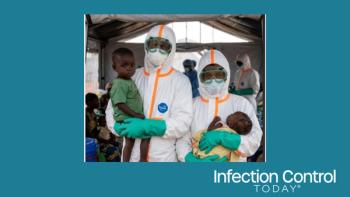
Infection preventionists in full PPE with children in DRC.  (Image credit: author with AI)
Nearly 4 months into the DRC's Bundibugyo virus disease outbreak, some indicators suggest transmission may be slowing. But shifting hotspots, treatment-center capacity problems, community deaths, and incomplete surveillance data show why national case totals alone cannot determine whether containment has been achieved.